Perform "archival-grade high-fidelity restoration + modern high-end Sony full-frame camera texture reconstruction" on the old photo I provided. Core goal: Not to redraw it or simply beautify/renovate it, but to maximize the repair of damage, blurriness, overexposure, and missing details in the old photo while strictly adhering to the original content, making the final effect as close as possible to what a modern high-end Sony Alpha full-frame camera would produce in terms of clarity, layers, texture, and authentic photographic effect. Restoration should focus on "recovery" and "reconstruction of real details" rather than "drawing another one based on the original." The background should retain reasonable layering. Overall keyword direction: high-fidelity restoration, archival-grade restoration, authentic photography, Sony Alpha full-frame texture, natural high resolution, authentic micro-contrast, delicate layers, credible coloring, documentary, restrained, faithful to the original.
View original prompt
请对我提供的这张老照片进行“档案级高保真修复 + 现代高端 Sony 全画幅相机质感重建”。核心目标:不是把它重新画一遍,也不是简单美颜翻新,而是在严格忠于原始照片内容的前提下,最大程度修复老照片中的损伤、模糊、过曝和细节缺失,使最终效果尽可能接近:如果同一瞬间由现代高端 Sony Alpha 全画幅相机真实拍摄出来,会呈现出的清晰度、层次、质感与真实摄影效果。修复应以“恢复”与“重建真实细节”为主,而不是“参考原图另画一张”。背景保留合理层次。整体关键词方向:高保真修复、档案级修复、真实摄影、Sony Alpha 全画幅质感、自然高解析、真实微反差、细腻层次、可信上色、纪实、克制、忠于原图。
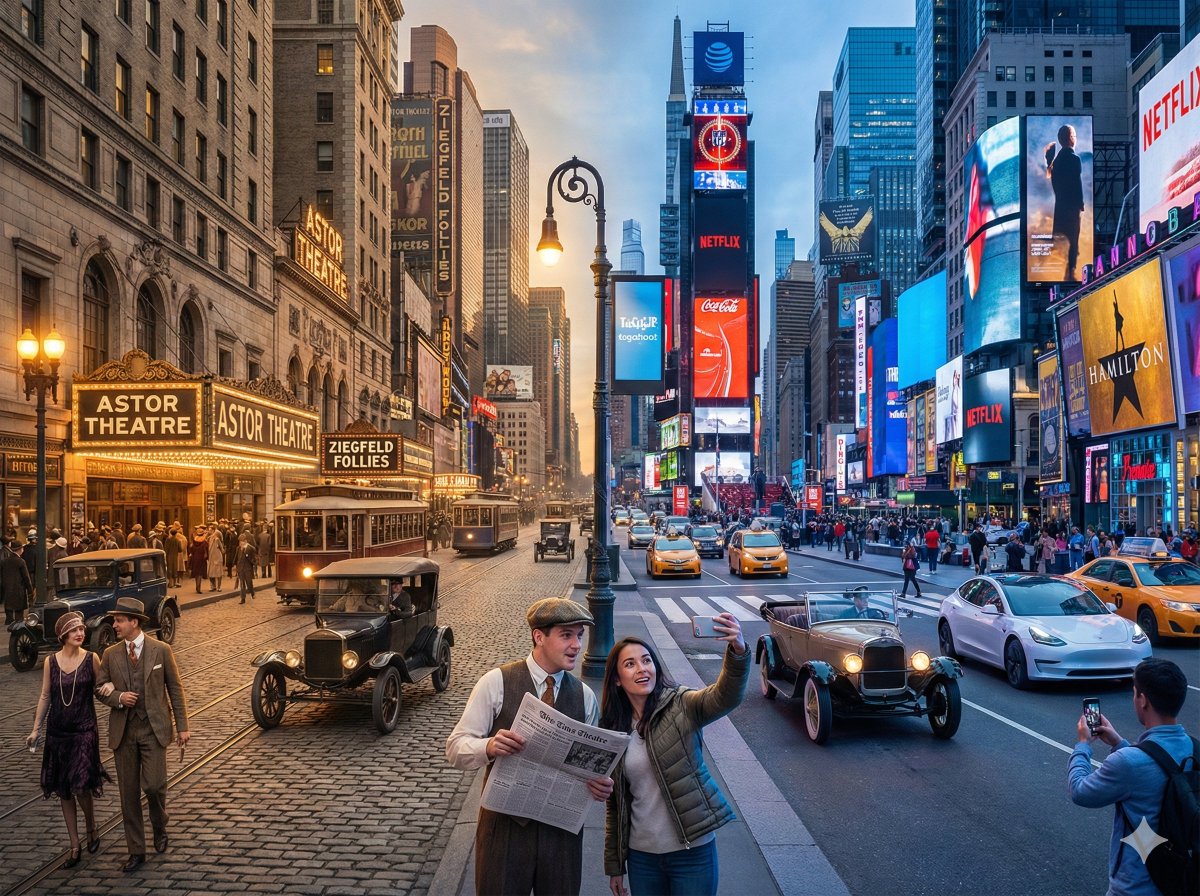
A horizontal split-screen cinematic shot of {argument name="scene" default="{Scene}"}, seamlessly blending two different eras: {argument name="era A" default="{Era_A}"} on the left and {argument name="era B" default="{Era_B}"} on the right (default: about 100 years ago vs. present day).
On the left side ({argument name="era A" default="{Era_A}"}): show era-appropriate architecture, interior or environment design, materials, vehicles, and props that clearly belong to that historical period. People wear authentic clothing from {argument name="era A" default="{Era_A}"}, including hairstyles, accessories, and typical items in their hands (such as books, umbrellas, instruments, letters, newspapers, etc.). The overall mood feels nostalgic and historically accurate.
On the right side ({argument name="era B" default="{Era_B}"}): show the same {argument name="scene" default="{Scene}"} in the modern era, with updated architecture or renovated structures, contemporary materials (glass, steel, LED screens, modern furniture), modern vehicles or equipment, and current technology (smartphones, laptops, cameras, etc.). People wear contemporary fashion that matches today’s style in this setting.
In the center: the two eras merge and overlap organically, without a hard dividing line. Elements from {argument name="era A" default="{Era_A}"} and {argument name="era B" default="{Era_B}"} visually interact: people from different times look at each other, walk through each other’s space, or seem surprised by the other era’s technology and objects. Architecture and environment smoothly morph from old to new (for example, stone gates turning into modern campus gates, classical concert hall décor fading into a futuristic stage, old street shops transforming into neon-lit storefronts).
Make sure the scene is not just a simple left/right comparison but a dynamic time-travel interaction where buildings, clothing, props, and human gestures clearly emphasize the contrast and fusion between the two eras. Photorealistic, 8k resolution, cinematic lighting, wide angle, highly detailed textures, rich sense of time-travel storytelling.
SCENE: {argument name="scene example" default="Times Square, New York"}
Era Comparison: {argument name="era comparison example" default="1920s and present day"}
Aspect Ratio: {argument name="aspect ratio" default="4:3"}
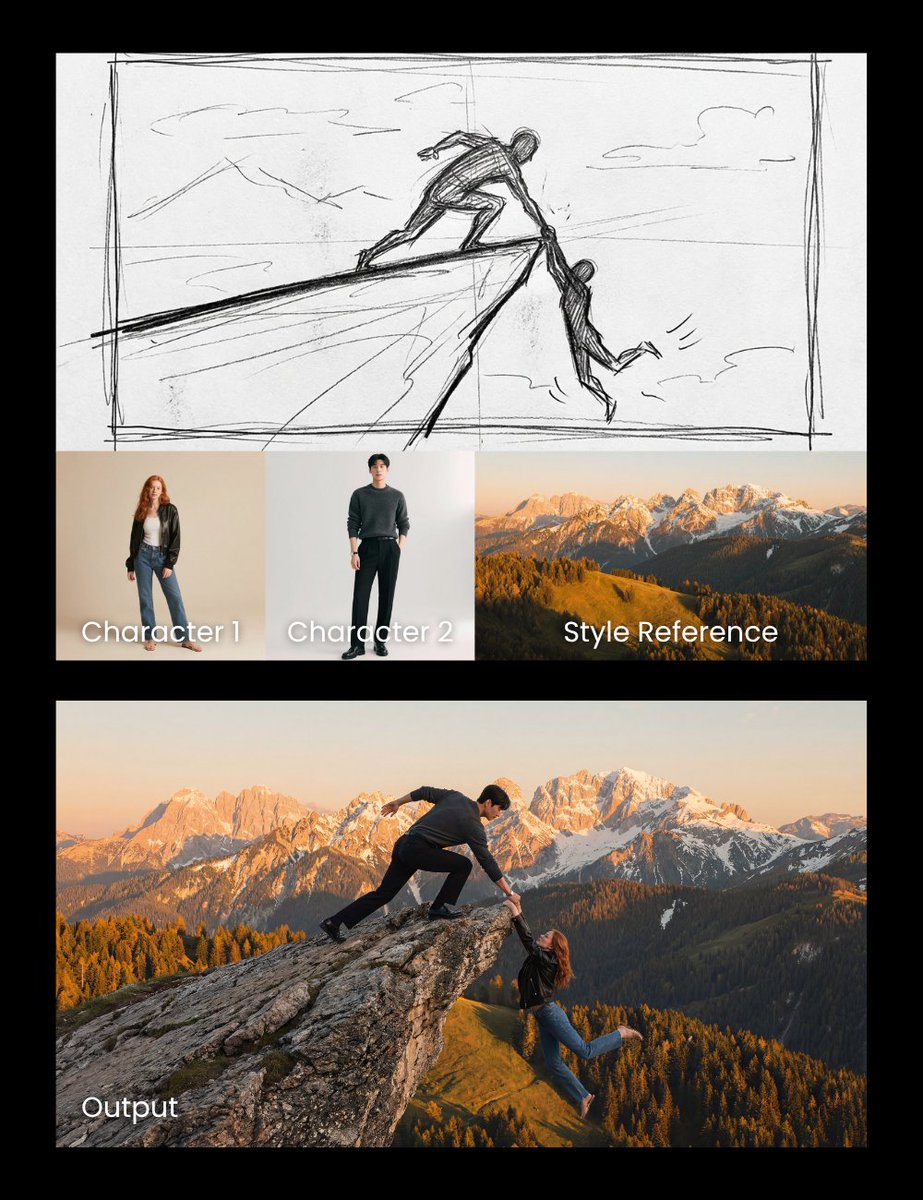
Realistic cliff rescue. Use the man photo as the hero and the woman photo as the one slipping. Match the sketch side pose and composition precisely, and use the mountain photo as a style reference for the background.