Editorial / Poster
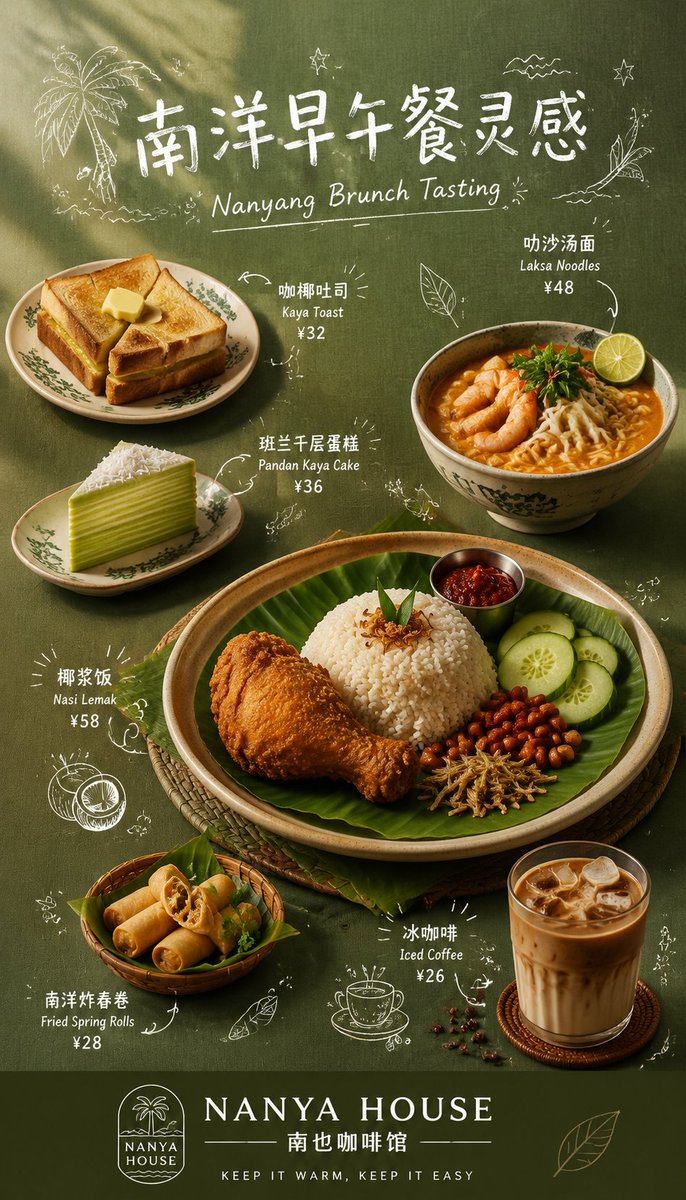
Nanyang Brunch Chalk Menu Poster
Goal: Create a premium vertical restaurant menu poster for a Nanyang brunch tasting, combining realistic food photography with hand-drawn chalk annotations and refined brand-menu layout.
Fields you can change: headline text, brand name, tagline.
Full prompt
Goal: Create a premium vertical restaurant menu poster for a Nanyang brunch tasting, combining realistic food photography with hand-drawn chalk annotations and refined brand-menu layout.
Canvas: Vertical 2:3 poster, warm olive-green linen/tablecloth background with soft natural sunlight and leaf shadows from the upper left. Use a high-end editorial food photography look, realistic dishes, shallow depth of field, appetizing warm highlights, and white handwritten chalk-style graphics.
Layout: Large hand-drawn Chinese headline centered near the top reading {argument name="headline text" default="南洋早午餐灵感"}, with the English subtitle “Nanyang Brunch Tasting” underneath in casual handwritten script and a thin underline. Arrange exactly 6 photographed menu items across the poster with white annotation arrows, doodles, and bilingual labels. Keep generous spacing and an elegant restaurant poster composition. Add a dark green brand footer strip at the bottom.
Menu items: Include exactly 6 dishes/drinks with these labels and prices: 1) Kaya Toast, ¥32, shown at upper left as stacked golden toast triangles with a square of butter on a patterned ceramic plate; 2) Laksa Noodles, ¥48, shown at upper right in a ceramic bowl with orange curry broth, noodles, shrimp, herbs, and a lime half; 3) Pandan Kaya Cake, ¥36, shown left-middle as a neat green layered cake slice topped with shredded coconut on a small ceramic plate; 4) Nasi Lemak, ¥58, shown as the largest hero dish in the center-lower area on an oval plate lined with banana leaf, including a dome of coconut rice, fried chicken leg, cucumber slices, sambal in a small metal cup, peanuts, and anchovies; 5) Fried Spring Rolls, ¥28, shown lower left in a small woven basket on banana leaf with several golden rolls and garnish; 6) Iced Coffee, ¥26, shown lower right in a clear glass with ice cubes, creamy coffee layers, on a small woven coaster.
Hand-drawn details: Add white chalk doodles throughout the negative space: palm tree sketch near top left, small stars, flying birds, leaf outlines, arrows pointing to dishes, little sparkle marks, a lime sketch near the spring rolls, a coffee cup doodle near the iced coffee, and playful scribbles around labels. Use thin irregular chalk lines, not digital-perfect vectors.
Brand footer: Bottom dark green band with a simple line-art palm logo on the left and the restaurant name {argument name="brand name" default="NANYA HOUSE"} in large white serif uppercase centered. Add Chinese text “南也咖啡馆” below or beside it, and the tagline {argument name="tagline" default="KEEP IT WARM, KEEP IT EASY"} in small spaced uppercase at the bottom. Include a small leaf line drawing on the right.
Visual style: Realistic food photography composited into a designed poster, premium handmade café aesthetic, Southeast Asian brunch mood, olive green, cream, white chalk, golden-brown food tones, natural shadows, crisp but warm. Avoid clutter, avoid extra menu items, avoid watermarks, and keep all text legible.



