Editorial / Poster
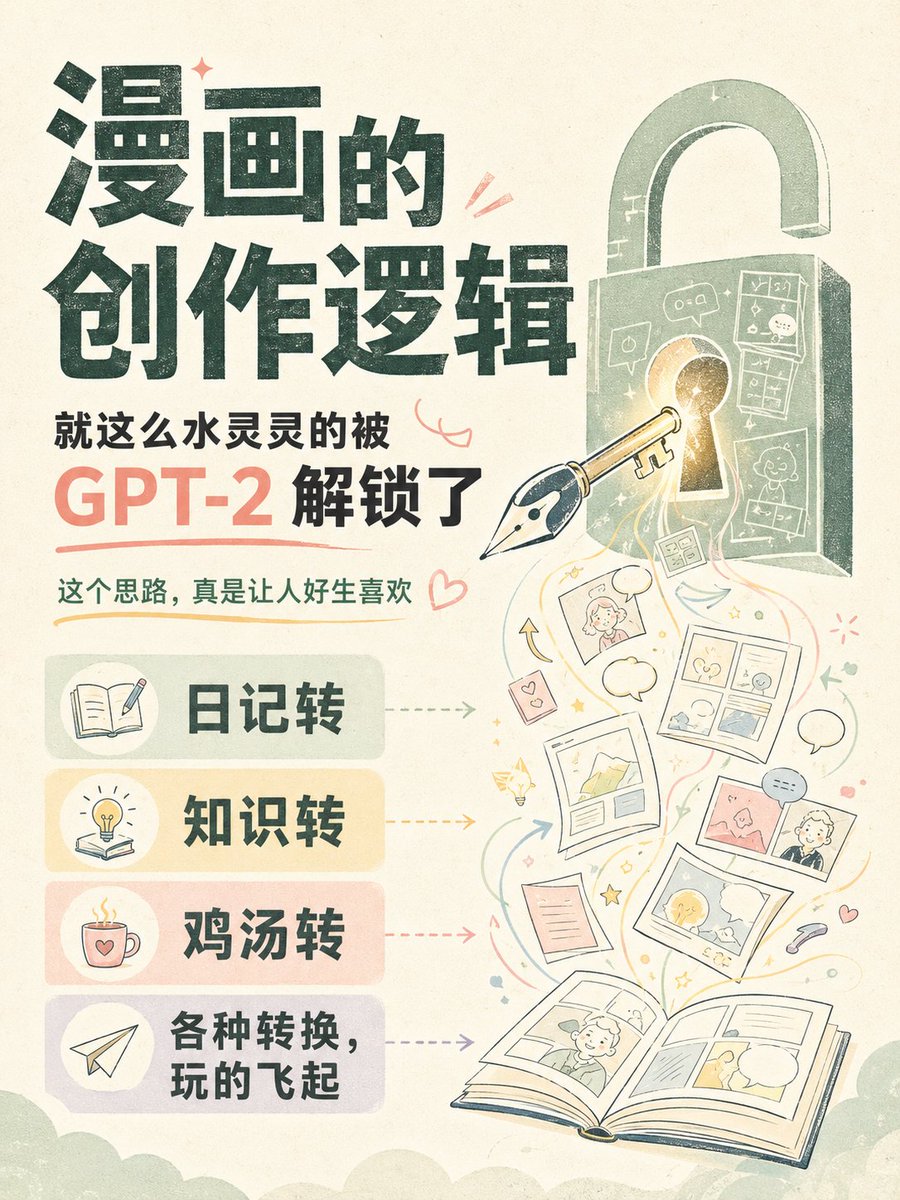
GPT-2 Comic Creation Logic Poster
Goal: Create a vertical Chinese promotional infographic poster about unlocking comic creation logic with GPT-2, using a playful hand-drawn editorial style.
Fields you can change: headline text, subheadline text, tagline, card one label.
Full prompt
Goal: Create a vertical Chinese promotional infographic poster about unlocking comic creation logic with GPT-2, using a playful hand-drawn editorial style.
Canvas: Portrait 3:4 poster, warm off-white textured paper background, soft pastel palette, slightly grainy risograph print texture, rounded friendly shapes, dark teal headline typography, coral accent text, pale green/yellow/pink/lavender section cards.
Layout: Left side is a bold text-heavy headline and feature list; right side is a large illustration of an open padlock with a glowing keyhole releasing comics, sketches, speech bubbles, arrows, and diary pages. Bottom right has an open comic book, with pages and comic panels swirling upward from it into the lock area. Keep generous margins and a lively but readable composition.
Text content: Use a large Chinese headline at top left: {argument name="headline text" default="漫画的\n创作逻辑"}. Under it, add smaller bold Chinese copy: {argument name="subheadline text" default="就这么水灵灵的被\nGPT-2 解锁了"}, with “GPT-2” in large coral red and the rest in dark teal/black. Add a green underline and smaller line: {argument name="tagline" default="这个思路,真是让人好生喜欢"}. Include small decorative coral sparkle marks and a hand-drawn heart near the tagline.
Feature cards: Place exactly 4 rounded horizontal cards stacked vertically on the lower left, each with one circular icon on the left and bold Chinese label on the right. Card 1 is pale green with an open notebook and pencil icon, label {argument name="card one label" default="日记转"}. Card 2 is pale yellow with a lightbulb rising from an open book icon, label “知识转”. Card 3 is pale peach with a steaming mug icon containing a heart, label “鸡汤转”. Card 4 is pale lavender with a paper airplane icon, label “各种转换,\n玩的飞起”. From each of the 4 cards, draw one dotted arrow pointing right toward the flying comic materials; use matching muted arrow colors.
Right-side subject details: Draw exactly 1 oversized open padlock in muted green-gray, positioned upper right, with chalk-like doodles on its body: tiny speech bubbles, comic thumbnails, and simple character sketches. Insert exactly 1 golden key into the keyhole; the key has a fountain-pen nib as its handle, symbolizing writing unlocking comics. Make the keyhole glow with warm yellow light.
Flying comic materials: Show exactly 6 loose paper/comic elements floating from the open book toward the lock: 1 small portrait sketch sheet, 1 four-panel comic page, 1 single-page layout with a yellow image block, 1 two-character dialogue comic page, 1 small pink note page, and 1 larger horizontal comic strip page. Add curved motion trails, sparkles, tiny hearts, arrows, and speech bubbles around them, but keep the main count of loose sheets exactly 6.
Bottom illustration: Draw exactly 1 open comic book at the lower right with visible comic panels and a cute simple character on the left page; use thin dark teal linework and pale yellow highlights. Add soft cloud-like pale green shapes along the bottom edge of the poster.
Visual style: Cute Chinese social-media poster aesthetic, hand-drawn line art, rounded sans-serif Chinese typography, vintage print grain, pastel accents, clean hierarchy, whimsical educational tone.
Constraints: Maintain the exact 4 feature cards and exact 6 loose flying paper/comic elements. Do not add extra major sections, extra logos, watermarks, QR codes, or English explanatory text beyond “GPT-2”.



