Editorial / Poster
Chinese Portrait Photography Book Page
Create a clean, premium Chinese editorial book page for a photography tutorial, portrait orientation, minimalist magazine-style layout on an off-white paper background with generous margins and refined typography.
Full prompt
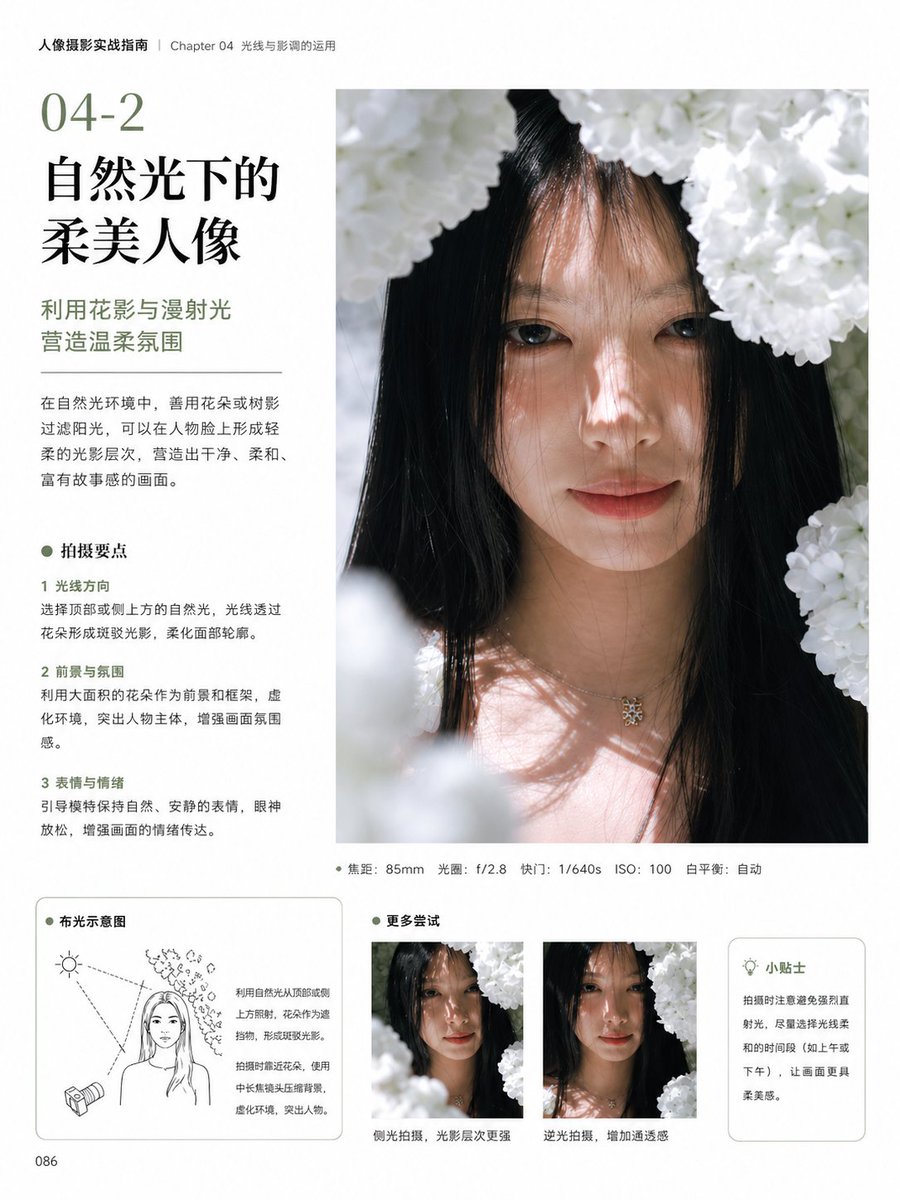
Create a clean, premium Chinese editorial book page for a photography tutorial, portrait orientation, minimalist magazine-style layout on an off-white paper background with generous margins and refined typography. The page is a single spread-like design with 5 clearly separated content blocks: a top header, a left text column, one large main portrait on the right, a bottom-left lighting diagram, and a bottom-right area containing 2 thumbnail examples plus 1 tip box. In the top header, place small Chinese text reading "人像摄影实战指南 | Chapter 04 光线与影响的运用". On the upper left, make a large chapter number in muted olive green reading "04-2", followed by a bold black Chinese title split across multiple lines: "自然光下的\n柔美人像". Below it, add a smaller olive-green subtitle: "利用花影与漫射光\n营造温柔氛围". Under the subtitle, include a short Chinese paragraph in black body text describing how natural surroundings and flowers or tree shadows can soften sunlight and create a clean, gentle, atmospheric portrait. Below that, create a section titled "● 拍摄要点" in olive green, followed by 3 numbered tips in Chinese body text: 1 "光线方向" with a sentence about choosing top or upper-side natural light and using floral shadows to soften facial contours; 2 "前景与氛围" with a sentence about using large soft foreground flowers to frame the scene and add depth; 3 "表情与情绪" with a sentence about guiding the model to keep a natural, calm expression and relaxed gaze. On the right side, place one large vertical portrait photo occupying the upper-right half of the page: a soft, airy close portrait of a young East Asian woman with long straight black hair, wearing a pale blush pink top and a delicate necklace, surrounded by abundant white hydrangea-like blossoms in the foreground and overhead, lit by diffused natural daylight with floral shadows and a gentle romantic mood, shallow depth of field, elegant editorial photography. Beneath the main photo, add a single line of small technical camera settings text in Chinese: "● 焦距:85mm 光圈:f/2.8 快门:1/640s ISO:100 白平衡:自动". In the bottom-left block, place a rounded-corner box containing a simple black-and-white hand-drawn lighting diagram with the title "● 布光示意图". Inside the diagram show 3 elements: a small sun icon at upper left, a camera icon at lower left, and a rear-view sketch of a standing woman centered, with dotted directional lines from the sun and labels in Chinese explaining that natural light from above front is softened by flowers into dappled diffused light, with flowers used as foreground and medium telephoto compression for a virtualized scene. In the bottom-right area, add a section title "● 更多尝试" in olive green above 2 small vertical thumbnail portraits of the same woman among white flowers. Give each thumbnail a short Chinese caption: left "侧光拍摄,光影层次更强", right "逆光拍摄,增加通透感". To the far right of the thumbnails, place a rounded rectangular tip box with the title "✦ 小贴士" and a short Chinese note advising to avoid direct harsh midday light and prefer soft light in the morning or late afternoon for a gentler image. Add a small page number "086" at the bottom left. Use elegant Chinese book typography, muted olive green accents, black body text, subtle gray divider lines, high-end publishing design, balanced whitespace, realistic print layout, and polished professional book typesetting.



