Editorial / Poster
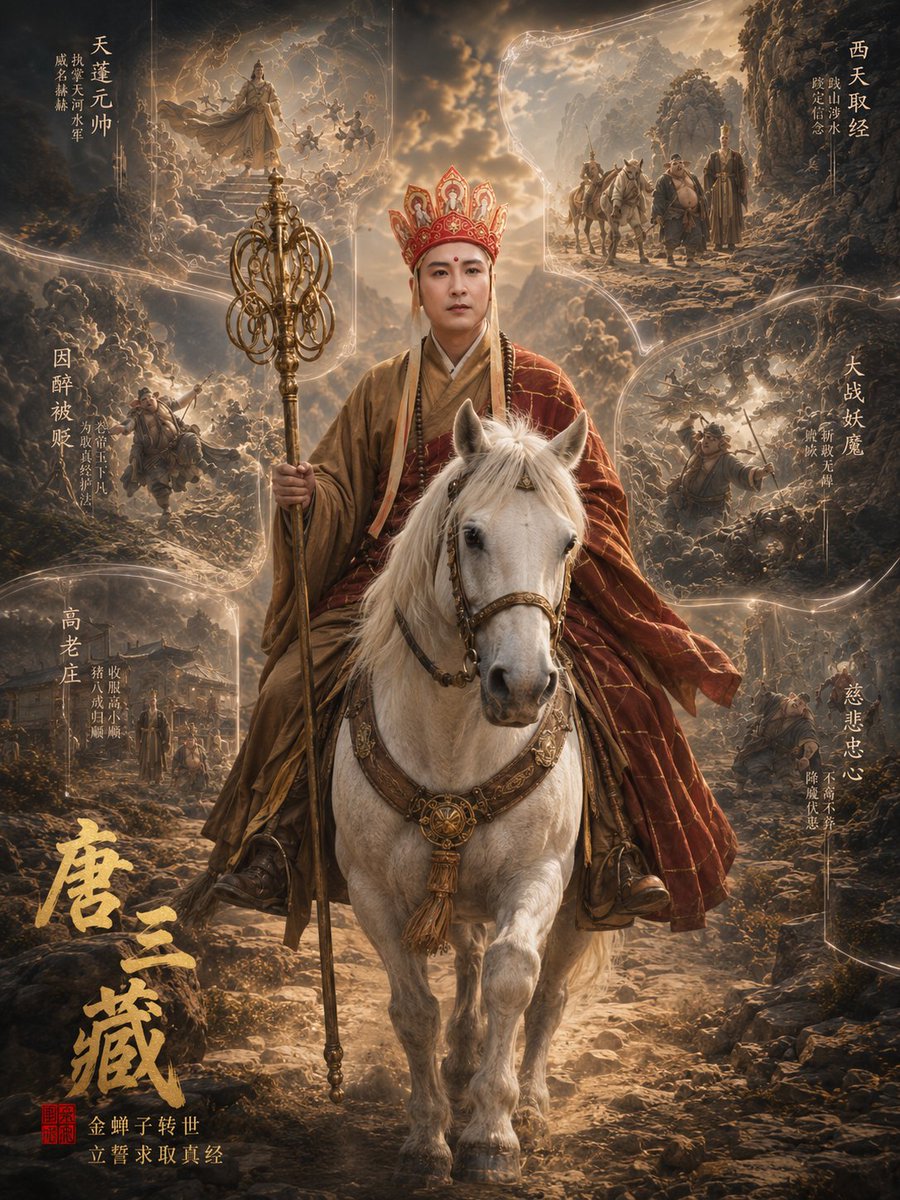
Tang Sanzang Mythic Character Poster
Goal: Create a cinematic vertical fantasy character archive poster for Tang Sanzang, inspired by Journey to the West, showing a holy monk returning from the Western Heaven in an epic 3D-realistic mythological style.
Fields you can change: character name, main title text, subtitle text, vignette label text.
Full prompt
Goal: Create a cinematic vertical fantasy character archive poster for {argument name="character name" default="Tang Sanzang"}, inspired by Journey to the West, showing a holy monk returning from the Western Heaven in an epic 3D-realistic mythological style.
Canvas: Vertical 3:4 poster, dark bronze and golden color palette, dramatic stormy clouds, rocky mountain road, glowing heavenly light, high detail, volumetric fog, painterly realism, ornate Chinese fantasy film-poster composition.
Main subject: One central rider: Tang Sanzang wearing layered Buddhist monk robes in red, ochre, and gold, an ornate red-and-gold ceremonial crown, prayer beads, and a calm sacred posture. His face is replaced by a smooth soft rectangular blurred placeholder with no facial features. He rides one white horse facing forward, with elaborate leather-and-gold tack, tassels, medallions, and raised front hoof. In his left hand he holds one tall golden monk staff with multiple circular rings and decorative filigree; the staff extends upward like a heroic weapon breaking out of the composition. Wind blows the red robe to the right.
Background and layout: Surround the central figure with exactly 6 glowing parchment-like memory vignettes, each separated by flowing golden light trails and translucent irregular frame edges. The 6 vignettes are: 1) upper left, a heavenly scene with a robed monk figure on a cloud platform and soldiers or spirits around him; 2) upper right, the pilgrimage group walking with horses through a rocky mountain pass; 3) middle left, a battle scene with monks or companions fighting demons in dusty terrain; 4) middle right, a chaotic monster battle on a dark hillside; 5) lower left, a temple or village courtyard with figures standing under warm light; 6) lower right, a sorrowful kneeling figure or companion in a desolate rocky landscape. Keep all six panels semi-transparent and integrated into the storm clouds, not as clean modern boxes.
Text content: Add large vertical brush-calligraphy title at the lower left using {argument name="main title text" default="唐三藏"}, in rough metallic gold ink. Add a small red square seal stamp below the title. Add smaller gold subtitle near the bottom using {argument name="subtitle text" default="金蝉子转世 立誓求取真经"}. Place vertical Chinese chapter labels around the six vignettes using {argument name="vignette label text" default="天蓬元帅 / 西天取经 / 因醉被贬 / 大战妖魔 / 高老庄 / 慈悲忠心"}; use elegant thin gold calligraphy with small secondary lines, arranged like an ancient manuscript. Do not add English text.
Visual style: Epic Chinese mythological dark fantasy, ultra-detailed 3D character statue archive, cinematic lighting, warm rim light, glowing gold dust, realistic horse anatomy, ornate costume embroidery, weathered rocks, ancient scroll texture, dramatic depth of field, high contrast, heroic sacred atmosphere.
Constraints: Use exactly 1 central rider, 1 white horse, 1 ornate ringed monk staff, and exactly 6 surrounding vignette panels. Maintain a symmetrical poster hierarchy with the central horse and rider dominating the image. No modern objects, no watermark, no extra characters in the foreground, no clean UI borders.



