Editorial / Poster
Plush Dog Scrapbook Poster
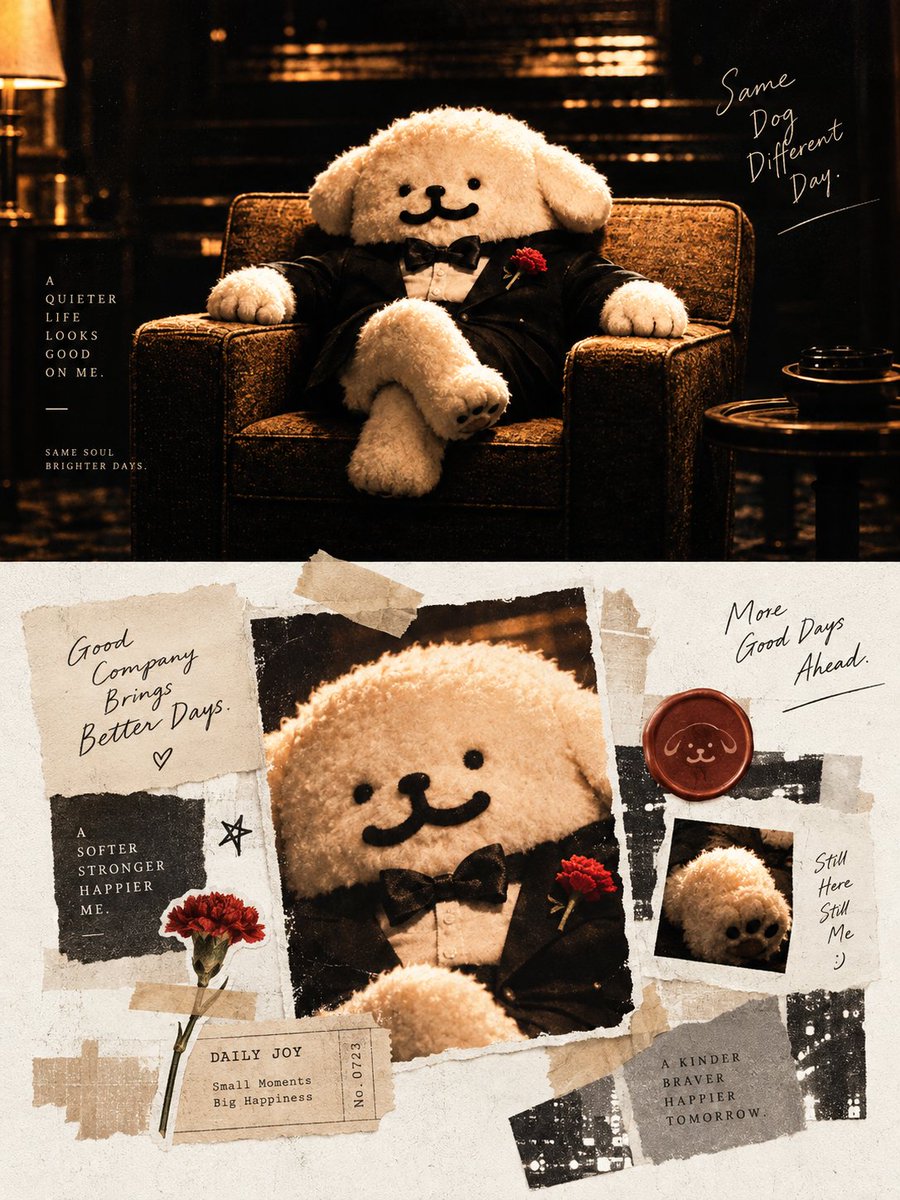
Goal: Create a warm editorial poster collage about a cute plush dog mascot living a quieter, happier life, using a torn-paper receipt aesthetic and cinematic amber photography.
Fields you can change: character name, main theme.
Full prompt
Goal: Create a warm editorial poster collage about a cute plush dog mascot living a quieter, happier life, using a torn-paper receipt aesthetic and cinematic amber photography. Feature {argument name="character name" default="a fluffy white plush dog"} as the only character: round face, floppy ears, black bead eyes, simple black smiling mouth, soft boucle texture, wearing a black tuxedo jacket, white shirt, black bow tie, and a small red carnation boutonniere.
Canvas: Vertical 3:4 poster, approximately 900 × 1200 px. Split the composition into two main zones: a dark cinematic photograph on the top half and a bright scrapbook collage on the bottom half.
Top half: Show the plush dog seated confidently in the center of a worn brown armchair, legs crossed, arms resting on both chair arms. The environment is a dim lounge or study with warm golden light, deep shadows, blurred shelves or piano-like horizontal highlights in the background, a table lamp glow at far left, and a small round side table with a dark cup or ashtray at far right. Use film grain, high contrast, sepia-black tones, and cozy noir atmosphere.
Top text: Include exactly 3 text blocks. Left vertical block reads “A QUIETER LIFE LOOKS GOOD ON ME.” with a small horizontal line underneath and tiny text below reading “SAME SOUL BRIGHTER DAYS.” Right handwritten block reads “Same Dog Different Day.” with an underline. Keep typography mixed: elegant spaced serif capitals on the left, loose handwritten script on the right.
Bottom half: Create a handmade paper collage on an off-white textured background with torn edges, beige masking tape, black photocopy scraps, gray paper rectangles, and receipt-like labels. Place exactly 3 dog-related image pieces: 1 large central torn photograph of the plush dog’s close-up in the tuxedo, slightly tilted; 1 small Polaroid-style photo at the lower right showing a close-up of the dog’s paw/face detail; 1 wax seal at upper right stamped with a simple line drawing of the dog face. Add exactly 1 real red carnation stem taped at the lower left, matching the boutonniere.
Bottom text and paper elements: Include exactly 7 readable text elements: 1 handwritten note at upper left reading “Good Company Brings Better Days.” with a small heart; 1 black paper label at left reading “A SOFTER STRONGER HAPPIER ME.”; 1 small ticket near bottom center reading “DAILY JOY / Small Moments / Big Happiness / No. 0723”; 1 handwritten note at upper right reading “More Good Days Ahead.” with underline; 1 small note beside the Polaroid reading “Still Here Still Me :)”; 1 gray label at lower right reading “A KINDER BRAVER HAPPIER TOMORROW.”; 1 small hand-drawn star near the left-middle collage area.
Visual style: Combine luxury magazine cover lighting with analog scrapbook design, torn receipts, tape marks, visible paper fibers, imperfect shadows, photocopied black textures, handwritten optimism, and a muted palette of cream, espresso brown, black, warm amber, gray, and deep red. The mood should feel gentle, resilient, nostalgic, and stylish.
Constraints: Use only one plush dog character, exactly 3 dog-related image pieces in the bottom collage, exactly 1 red carnation stem, and exactly 7 readable bottom text elements. Avoid extra characters, modern UI elements, glossy plastic, neon colors, or clean vector graphics. Main message theme: {argument name="main theme" default="same dog, different day; quieter life, brighter days"}.