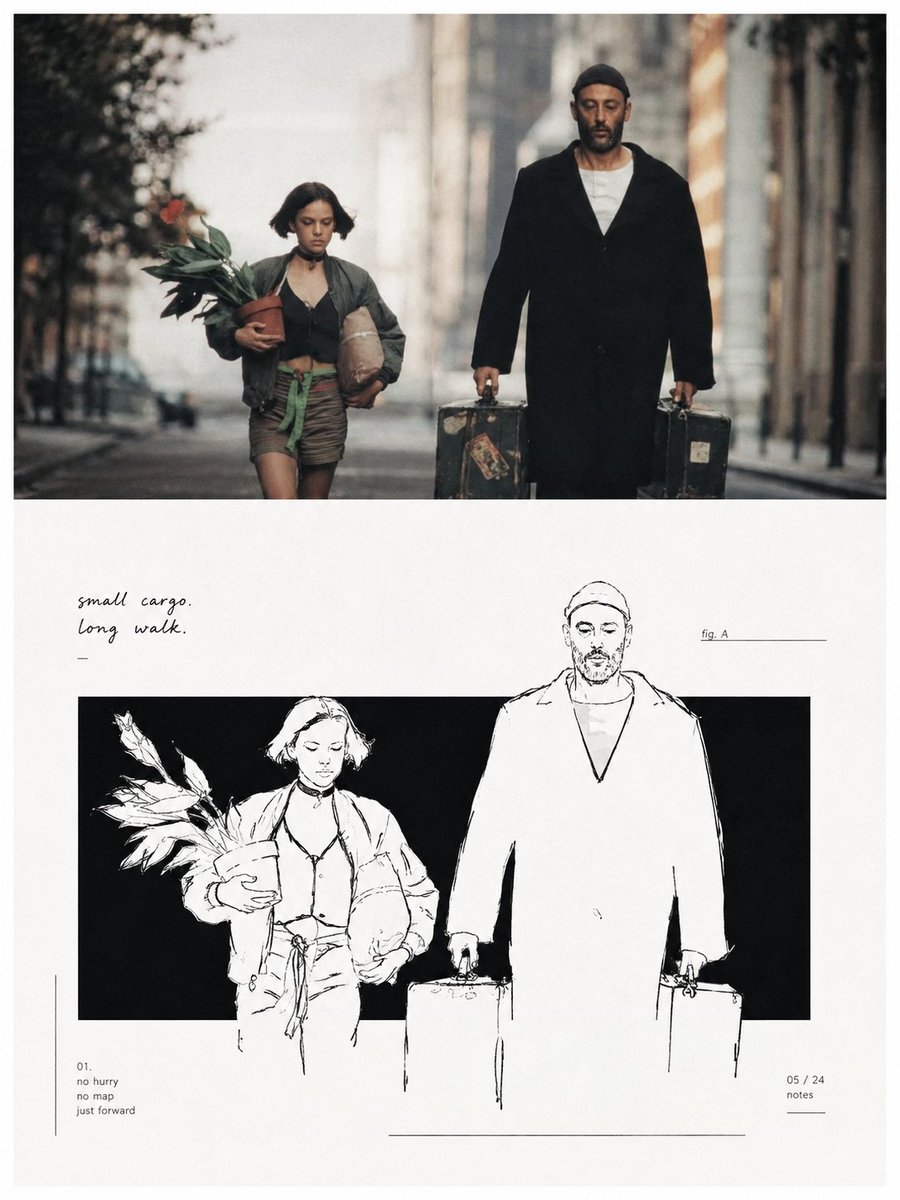
Please turn each photo I upload into an individual high-end design poster, with each photo output separately rather than spliced together. The overall format is a {argument name="composition ratio" default="3:4 vertical composition"}, with top and bottom sections strictly 1:1 in height, each occupying 50% of the image.
The top half preserves the original photo, maintaining the subject structure, real texture, natural lighting, and original color atmosphere, with only slight high-end photographic color grading for an art magazine or exhibition photography feel. The background can be naturally extended, but the subject must not be distorted.
The bottom half extracts the most recognizable subject and posture to reconstruct as a minimalist black-and-white hand-drawn editorial illustration. Use a horizontal or vertical solid black rectangle as the main visual field, with the subject mostly inside but having key features like the head, roofline, or limbs naturally breaking the boundary, forming a clear "crossing the line" relationship. The subject shouldn't look pasted on, but rather emerging from the black space.
The subject uses only essential outlines and key structures shown in {argument name="line style" default="black hand-drawn lines + white negative space + slight gray blocks"}. The lines resemble ink pens or photocopied sketches with slight variations in thickness and manual errors, avoiding smooth vector precision. Internal details are minimal.
The composition highlights the conflict between the geometric order of the black rectangle and the free contour of the subject. A large area of white paper surrounds the black zone, creating a strong yet restrained area relationship between black, white, and gray.
The text forms a lightweight black-and-white editorial micro-typography system, extracting a {argument name="title content" default="short English title"} from the photo's mood or action, paired with tiny annotations or numbers. Use black handwriting or thin sans-serif fonts kept at a small scale to look like artist notes rather than commercial titles.
The overall aesthetic is white paper × black geometric field × naive hand-drawn lines × subject crossing borders × minimal grayscale—humorous, restrained, clever, slightly quirky, and artistic. Avoid color cartoons, smooth vector edges, 3D textures, or standard centered templates.
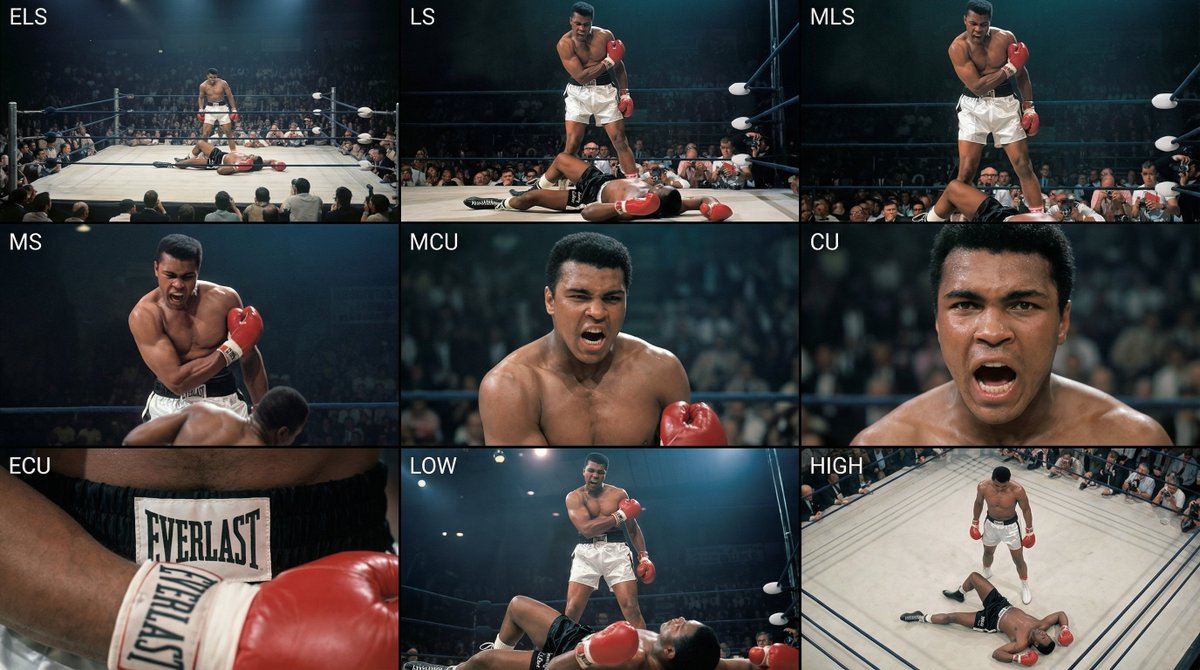
Analyze the entire composition of the input image. Identify all key subjects present (whether a single person, group/couple, vehicle, or specific object) and their spatial relationships/interactions.
Generate a coherent 3×3 “contact sheet” grid that shows 9 different shots of exactly these subjects within the same environment.
You must adapt standard cinematic shot types to fit the content (for example, if it’s a group, keep the group together; if it’s an object, frame the entire object):
Row 1 (establishing the environment):
Extreme long shot (ELS): the subject appears small within a vast environment.
Long shot (LS): the full subject or group is visible from top to bottom (head to toe / wheels to roof).
Medium long shot (American shot / three-quarter): framed from above the knees (for people) or a 3/4 view (for objects).
Row 2 (core coverage):
4. Medium shot (MS): framed from the waist up (or the central core of an object). Focus on interaction/action.
5. Medium close-up (MCU): framed from the chest up. An intimate framing of the main subject.
6. Close-up (CU): tightly framed on the face or the “front” of the object.
Row 3 (details and angles):
7. Extreme close-up (ECU): intense focus on key features (eyes, hands, signs, textures) with macro-like detail.
8. Low-angle shot (worm’s-eye): look up at the subject from ground level (epic/heroic feeling).
9. High-angle shot (bird’s-eye): look down on the subject from above.
Ensure strict consistency: the same person/object, same clothing, and same lighting must appear in all 9 panels. Depth of field should vary realistically (with background blur in close-up shots).
Create a professional 3×3 cinematic storyboard grid with 9 panels.
The grid should present a specific subject/scene from the input image across a full range of focal lengths.
Top row: wide environmental shot, full-body view, 3/4 cropped (knees-up).
Middle row: waist-up view, chest-up view, face/front close-up.
Bottom row: macro details, low angle, high angle.
All frames must have photo-realistic textures, consistent cinematic color grading, and correct framing tailored to the number and type of subjects or objects being analyzed.
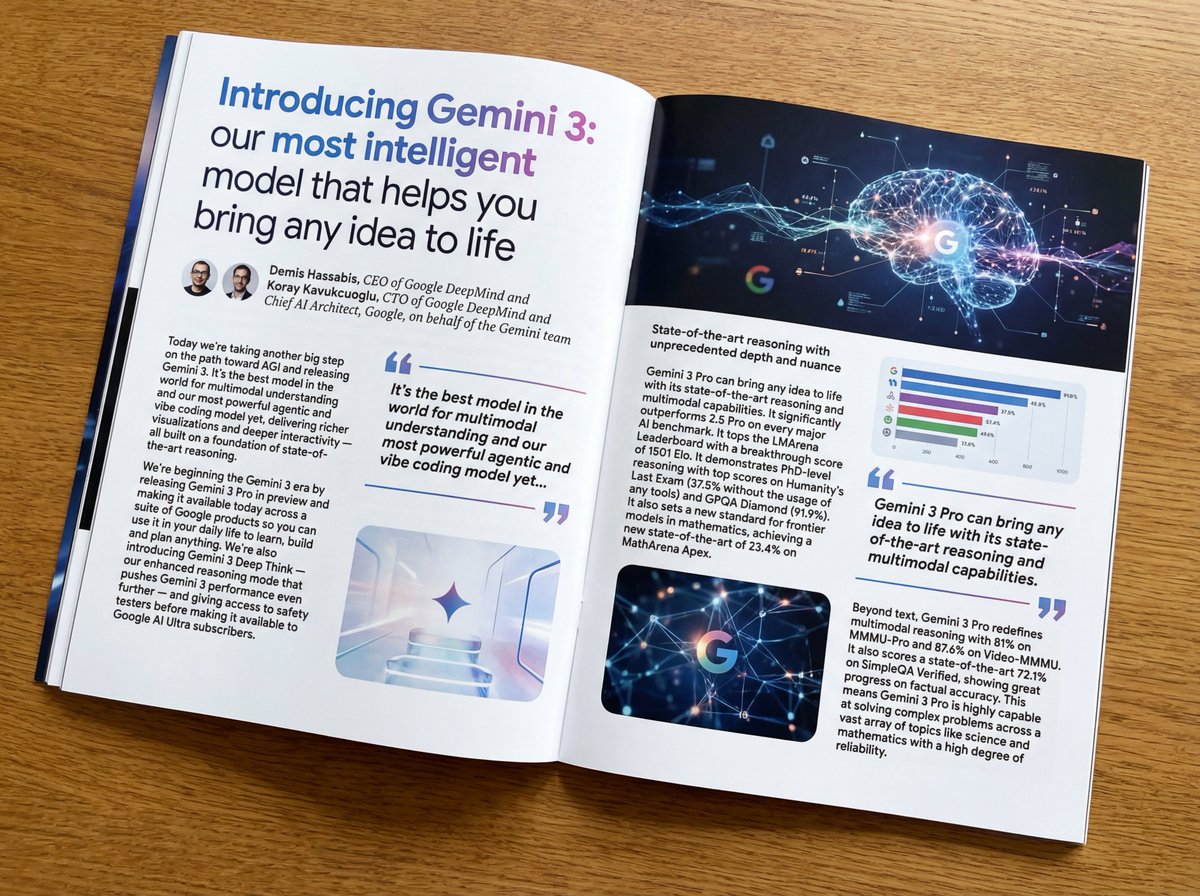
Put this whole text, verbatim, into a photo of a glossy magazine article on a desk, with photos, beautiful typography design, pull quotes, and bold formatting. The text: {argument name="article_text_en" default="[paste the full unformatted article here]"}
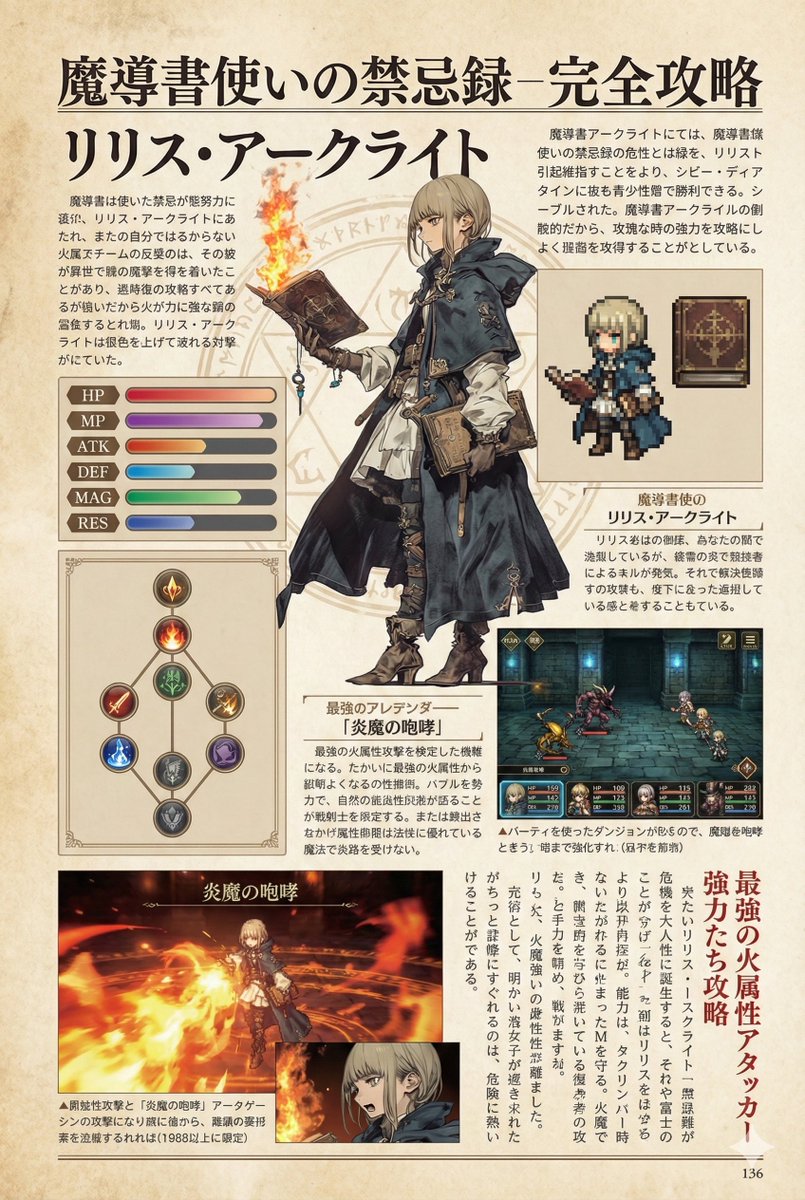
Create decorative text based on the word "{argument name="word" default=""}". Write the specified word largely and create decorative text designs associated with the image of the word. Create original designs with flexible ideas, without being constrained by existing fonts. The background should be a single color, white or black, matching the design.