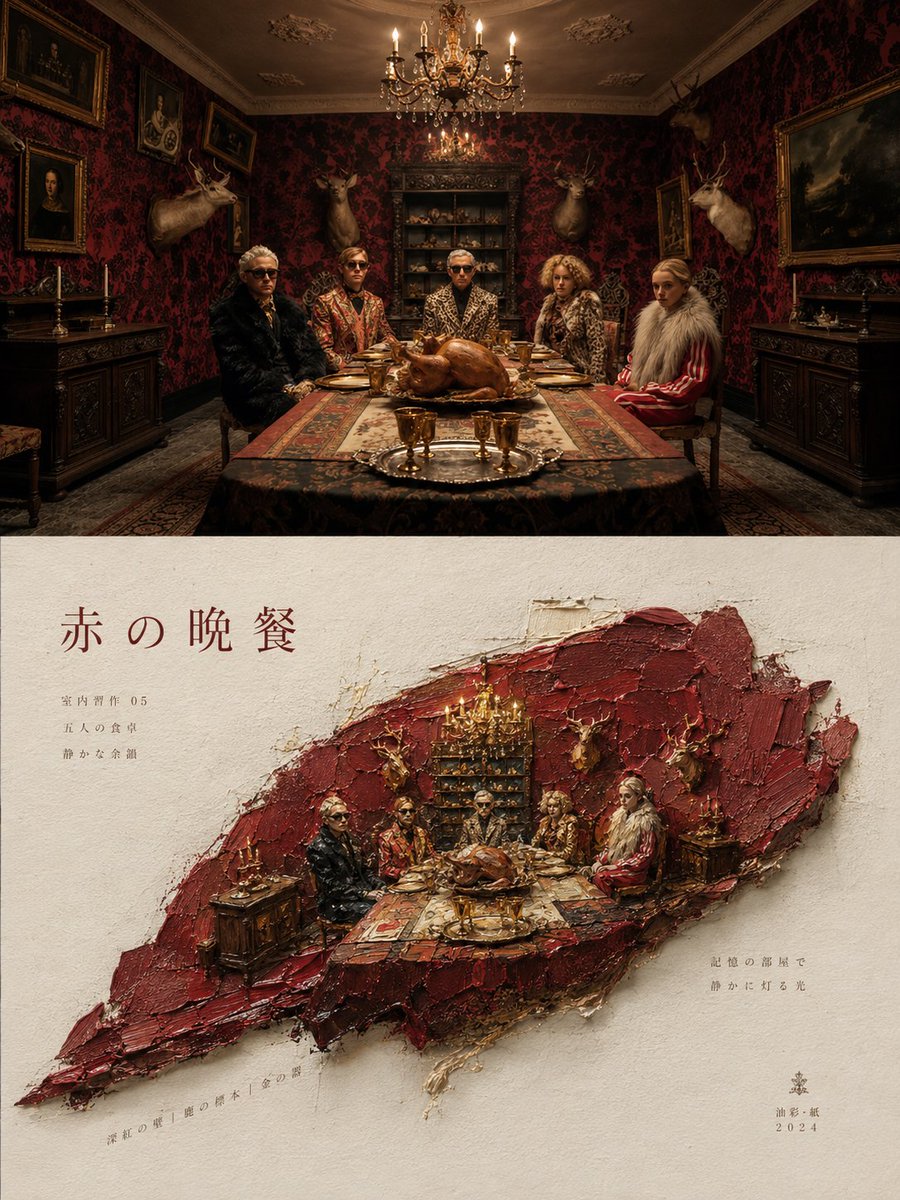
Please turn each photo I upload into an independent high-end design poster, no multi-image stitching, each photo output separately. Use a 3:4 vertical composition overall, with the top and bottom regions strictly 1:1 in height, each occupying 50% of the frame.
The upper half preserves the original photo, maintaining the subject structure, spatial relationships, authentic materials, natural lighting, and original color atmosphere, with only slight professional photographic color grading to give it the quality of art magazines, independent publications, and exhibition photography. To adapt to the frame, the environmental background can be naturally extended, but the subject must not be stretched, distorted, or changed.
The lower half uses a clean ivory background to extract the most recognizable subjects, outlines, gestures, and narrative relationships from the photo, converting them into minimalist abstract visuals according to a "deconstruction—screening—refinement—reconstruction" logic. Focus on preserving unique volume proportions, axes, curves, intersections, layering, occlusions, negative space, and asymmetrical relationships, reorganized with a few geometric shapes; do not fully replicate details, but the correspondence with the original image above must be immediately felt. The composition emphasizes visual gravity, scale differences, primary/secondary hierarchy, positive/negative shapes, and whitespace rhythm, avoiding iconization, average arrangement, and fragmented accumulation.
The color scheme is entirely extracted from the photo above and simplified into 1 primary color, 1 dark structural color, and 1 light/neutral color, with at most a few key accent colors added. Prioritize preserving the most recognizable and spirited colors from the original image, building layers through area proportions, depth relationships, and local contrast, maintaining cleanliness, restraint, and vitality, while avoiding overall graying and average color use.
The text establishes a complete high-end editorial-style micro-typography system: extract a poetic English main title of 2–5 words from the photo's light/shadow, space, motion, material, or emotion, paired with 2–4 sets of tiny auxiliary text, which can be freely combined from short phrases, status words, location or object information, numbers, chapter markers, serial numbers, scale-style digits, directional words, material words, archive tags, or miniature descriptions, without using years. The main title is responsible for emotion, while the small text handles order and detail, making the text like editorial notes in art books, architectural journals, or exhibition catalogs, rather than common titles.
The text must be composed with abstract graphics, arranged along geometric axes, edges, outlines, or negative space, and can be vertically arranged, rotated, columned, spaced out, edge-aligned, corner-pressed, spanning color blocks, embedded between shapes, or intertwined and aligned with the subject; allow one set of text to be extremely small and another slightly larger, establishing a reading path through font size contrast, spacing, direction, and position. Overall, use a restrained combination of serif and thin editorial fonts, letting abstract shapes handle visual memory and text handle structure, rhythm, and a sense of sophistication.
The overall presentation features a visual temperament of authentic photography × abstract memory × editorial typography, being modern, quiet, restrained, exquisite, artistic, and collectible, avoiding complex collages, cheap decorations, commercial template vibes, and meaningless abstraction.
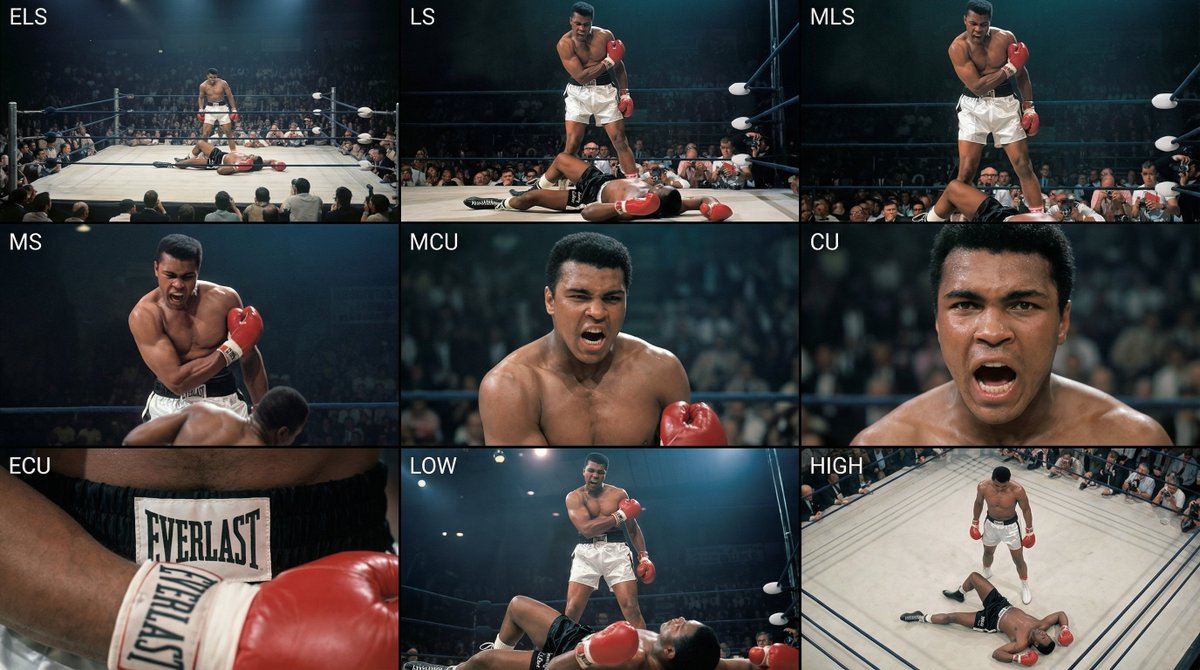
Analyze the entire composition of the input image. Identify all key subjects present (whether a single person, group/couple, vehicle, or specific object) and their spatial relationships/interactions.
Generate a coherent 3×3 “contact sheet” grid that shows 9 different shots of exactly these subjects within the same environment.
You must adapt standard cinematic shot types to fit the content (for example, if it’s a group, keep the group together; if it’s an object, frame the entire object):
Row 1 (establishing the environment):
Extreme long shot (ELS): the subject appears small within a vast environment.
Long shot (LS): the full subject or group is visible from top to bottom (head to toe / wheels to roof).
Medium long shot (American shot / three-quarter): framed from above the knees (for people) or a 3/4 view (for objects).
Row 2 (core coverage):
4. Medium shot (MS): framed from the waist up (or the central core of an object). Focus on interaction/action.
5. Medium close-up (MCU): framed from the chest up. An intimate framing of the main subject.
6. Close-up (CU): tightly framed on the face or the “front” of the object.
Row 3 (details and angles):
7. Extreme close-up (ECU): intense focus on key features (eyes, hands, signs, textures) with macro-like detail.
8. Low-angle shot (worm’s-eye): look up at the subject from ground level (epic/heroic feeling).
9. High-angle shot (bird’s-eye): look down on the subject from above.
Ensure strict consistency: the same person/object, same clothing, and same lighting must appear in all 9 panels. Depth of field should vary realistically (with background blur in close-up shots).
Create a professional 3×3 cinematic storyboard grid with 9 panels.
The grid should present a specific subject/scene from the input image across a full range of focal lengths.
Top row: wide environmental shot, full-body view, 3/4 cropped (knees-up).
Middle row: waist-up view, chest-up view, face/front close-up.
Bottom row: macro details, low angle, high angle.
All frames must have photo-realistic textures, consistent cinematic color grading, and correct framing tailored to the number and type of subjects or objects being analyzed.
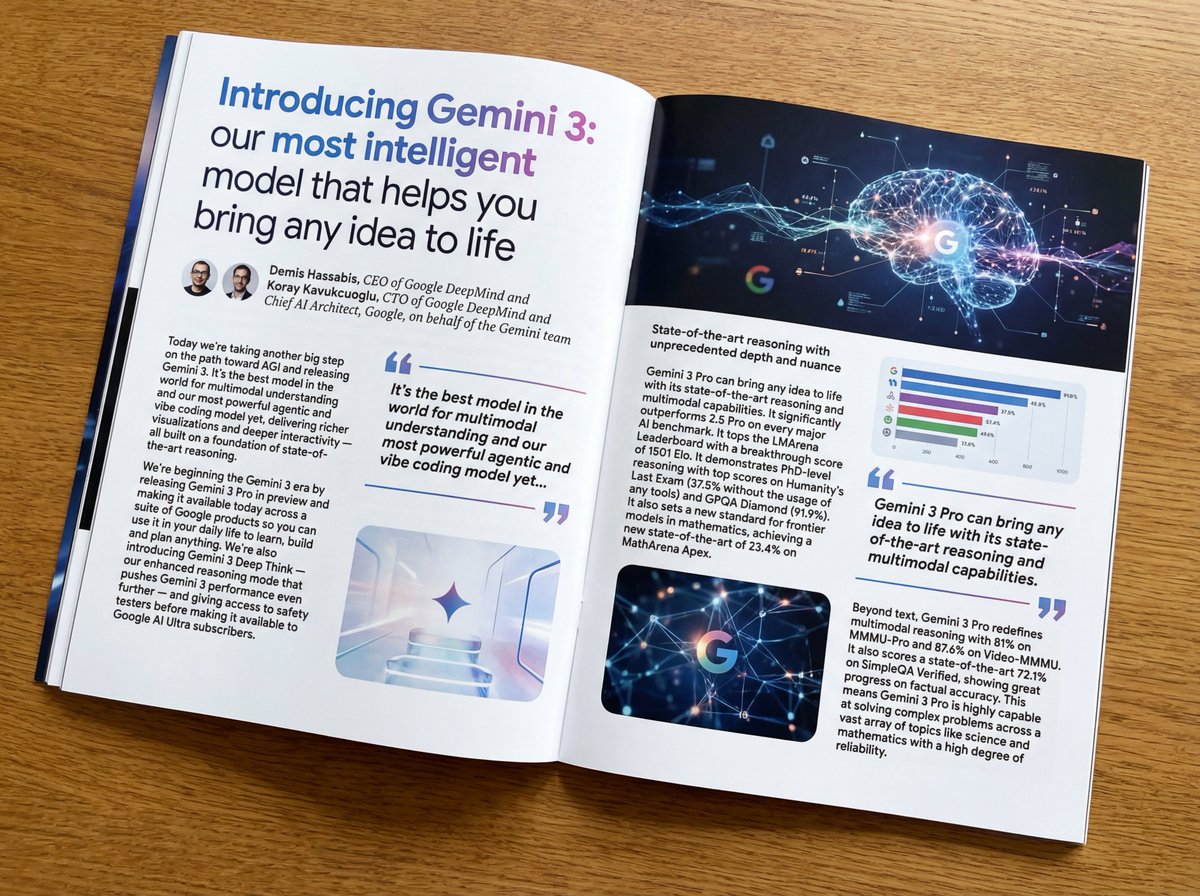
Put this whole text, verbatim, into a photo of a glossy magazine article on a desk, with photos, beautiful typography design, pull quotes, and bold formatting. The text: {argument name="article_text_en" default="[paste the full unformatted article here]"}
Create decorative text based on the word "{argument name="word" default=""}". Write the specified word largely and create decorative text designs associated with the image of the word. Create original designs with flexible ideas, without being constrained by existing fonts. The background should be a single color, white or black, matching the design.