Editorial / Poster
Cinematic Motion Blur Portrait with Typography
Full prompt
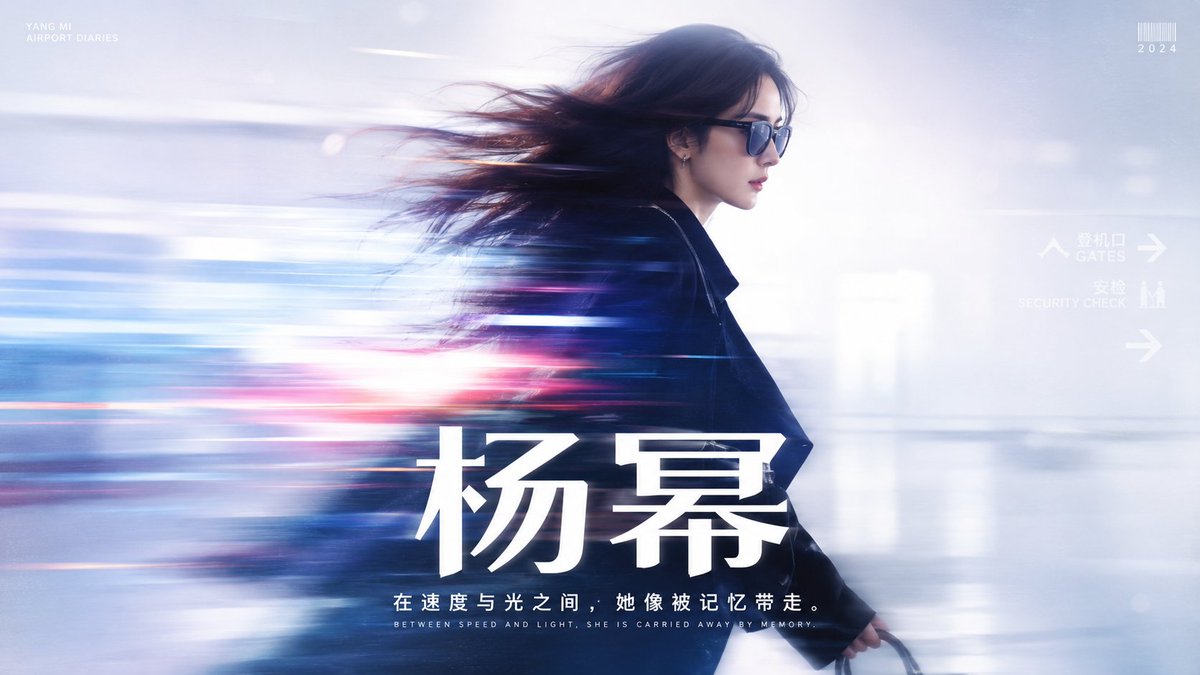
Generate a cinematic portrait with dynamic motion blur based on the theme: {argument name="theme" default="Dilraba walking quickly at the airport"}. The subject occupies the main visual weight with a quiet side profile or half-body silhouette, with subtle recognizable details at the edges of the face. The body and hair are stretched into a long-distance horizontal motion blur to one side, like a band of light passing through the subject and gradually blending into the background, making the character look like they are being carried away by speed, memory, or information flow. The background is a high-brightness, clear, and soft airy field without complex scenes. Colors are extracted from the material, emotion, and narrative temperature of the theme, preserving large areas of bright, calm base colors, deep shadows on the subject, a few highly saturated glowing accent colors, and a clean relationship between color gradations, creating a dreamlike and clean tension between warm and cold, avoiding muddiness, staleness, or ashy tones. The light is softly diffused, the focus is slightly loose, and the edges have slight film grain and lens flare, but the overall feel remains airy, transparent, and modern. The visual information density is low, leaving plenty of empty space for the sense of speed to breathe; text is used as part of the visual structure in a pure white modern sans-serif font, with the core word in a very large size placed below the subject or near the visual center, and short explanatory sentences using smaller font sizes, compact line spacing, and a centered rhythm. All text acts like a clear interface layer superimposed on the light mist, holding down the visual hierarchy without breaking the flow of the soft-focus image.
Aspect ratio {argument name="aspect ratio" default="3:4"}
View original prompt
围绕{argument name="主题" default="在机场快步走的迪丽热巴"}生成一张具有电影感的动态拖影肖像画面:主体以安静的侧面轮廓或半身剪影占据主要视觉重量,面部边缘保持少量可辨识细节,身体和头发向一侧被拉成长距离水平运动模糊,拖影像光带一样穿过主体并逐渐融入背景,使人物像正在被速度、记忆或信息流带走。背景是一整片高明度、清透、柔和的空气场,不做复杂场景,色彩从主题自身的材质、情绪和叙事温度中提取,保留大面积明亮冷静底色、较深主体暗部、少量高饱和发光强调色与干净色阶之间的关系,形成梦幻而清洁的冷暖张力,避免浑浊、陈旧和烟灰感。光线柔软扩散,焦点略松,边缘有轻微胶片颗粒和镜头晕散,但整体仍然通风、透明、现代。画面信息密度很低,留出大量空域让速度感呼吸;文字作为视觉结构的一部分使用纯白现代无衬线字体,核心词用极大字号放在主体下方或画面重心附近,短句说明使用较小字号、紧凑行距和居中节奏,所有文字像叠在光雾上的清晰界面层,既压住画面层级,又不破坏柔焦影像的流动感。 比例{argument name="比例" default="3:4"}