Editorial / Poster
Same Platform Rainy Poster
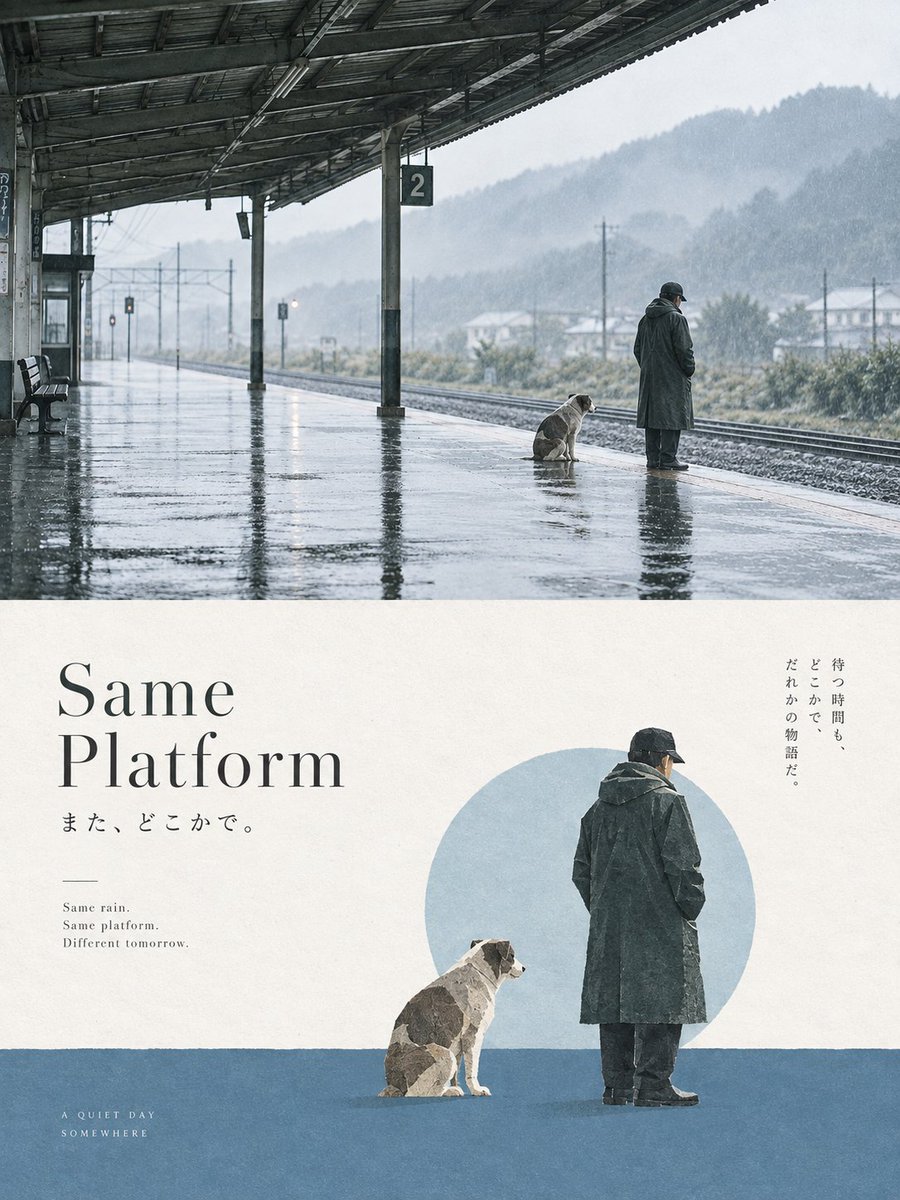
Goal: Create a minimalist editorial poster combining a cinematic rainy train-platform photograph with a quiet graphic-design reconstruction below, themed around waiting, loneliness, and companionship.
Fields you can change: headline text, Japanese subtitle, vertical Japanese quote.
Full prompt
Goal: Create a minimalist editorial poster combining a cinematic rainy train-platform photograph with a quiet graphic-design reconstruction below, themed around waiting, loneliness, and companionship.
Canvas: Vertical poster in a 3:4 aspect ratio, split horizontally into 2 equal-feeling sections: the upper half is a realistic rainy photograph, the lower half is a cream-paper minimalist layout with typography and cutout figures.
Upper section: Show a deserted rural railway platform in heavy rain, viewed from a wide diagonal perspective under a dark metal station roof. The wet concrete platform reflects the roof beams, pillars, and sky like a mirror. Include exactly 1 elderly man in a long dark raincoat and black cap standing near the platform edge, facing away to the right, and exactly 1 medium-sized dog sitting beside him, also facing the tracks. Include exactly 1 empty bench on the far left, exactly 1 square platform sign with the number “2” hanging from a pillar, and exactly 2 visible railway tracks running into the misty distance. Background: pale gray rainy mountains, faint houses, utility poles, and soft haze. Mood is quiet, cold, melancholic, cinematic, with muted blue-gray tones.
Lower section layout: Use an off-white textured paper background. On the left, place a large elegant serif headline reading {argument name="headline text" default="Same Platform"}, stacked on two lines, dark charcoal, with generous letter spacing and magazine-poster refinement. Beneath it place Japanese subtext: {argument name="Japanese subtitle" default="また、どこかで。"}. Below that, add a short thin horizontal line, then a tiny English poem in small serif text: “Same rain. / Same platform. / Different tomorrow.” In the bottom-left corner add small spaced uppercase text: “A QUIET DAY / SOMEWHERE”.
Lower section illustration: On the right half, place cutout-style figures of the same elderly man and dog from the upper photo, simplified into a collage aesthetic. The man stands with his back turned, wearing a long dark raincoat, dark pants, black cap, and black shoes. The dog sits to his left. Behind them is exactly 1 large pale blue circle like a moon or memory. Across the bottom third, add exactly 1 horizontal muted blue ground block spanning the width. On the upper-right, add vertical Japanese text: {argument name="vertical Japanese quote" default="待つ時間も、どこかで、だれかの物語だ。"}.
Visual style: Japanese minimalist editorial design, quiet literary poster, soft grain, matte paper texture, restrained negative space, muted blue-gray and cream palette, realistic top image contrasted with simplified collage bottom image. Keep the composition refined and calm, with no extra characters, no vehicles, no crowds, no bright colors, and no watermark.



