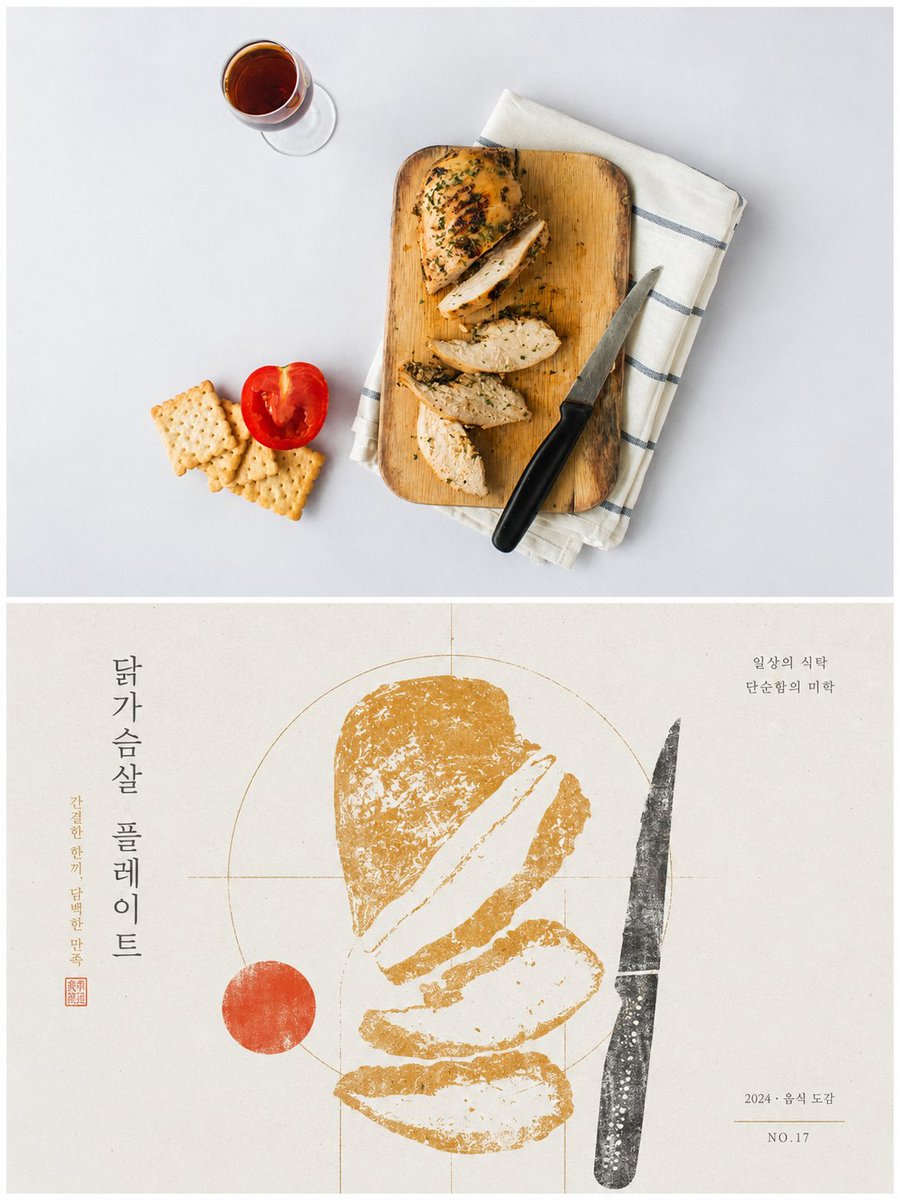
Please turn each photo I upload into a separate high-end design poster, avoiding multi-photo stitching, and output each photo individually. Use a 3:4 vertical composition overall, where the top and bottom sections are strictly 1:1 in height, each occupying 50% of the frame. The upper part retains the original photo, preserving its main structure, realistic texture, natural light/shadow, and original color atmosphere, with only slight high-end photographic color grading for an art publication and exhibition quality. To fit the frame, the sky, ground, or environment may be naturally extended, but the subject must not be stretched, distorted, or altered. The lower part extracts the most recognizable **subject, silhouette, posture, and narrative relationship** from the photo. First, interpret its core meaning, cultural attributes, or emotional connection, then reconstruct it into a graphic image with the aesthetic of folk catalogs, ancient artifact rubbings, and modern graphic design. Do not translate photo elements literally, and avoid generic traditional patterns; retain only **one core visual motif and a few truly narrative auxiliary forms**. Through silhouettes, negative shapes, local zooming, merging of forms, and symbolic translation, ensure the graphics both reflect the original object and convey its underlying meaning. The composition is built on a rigorous **geometric skeleton and proportion system**. Based on the subject's structure, extract circles, squares, triangles, curves, axes, or repeating proportions as the 'geometric matrix.' All subjects, auxiliary graphics, text, and negative space should then interact with this matrix through alignment, tangency, co-axiality, nesting, mirroring, proportional progression, or boundary cropping. The layout can be free-form, off-center, boundary-crossing, or asymmetric, but it must share the same structural logic, creating a clear visual focus, hierarchy, rhythm, and negative space. The order should be clear from a distance, while traditional imprints and detailed variations are visible up close, avoiding random scattering and decorative clutter. The color scheme extracts the most recognizable and vital colors from the photo, summarizing them into a clean and restrained print color palette. Use a bright, light paper base to create 'breathing room,' a dark color for the visual skeleton, and 1–2 theme colors from the original image for the subject and minor accents. Establish layers through area ratios, overprinting, and value relationships; colors should be clean and spirited, avoiding muddy aging, fixed folk palettes, and cluttered multi-colors. The texture uses a mix of **woodcut rubbing, dry-brush screen printing, and old-style catalog printing**. Ink gaps, scratches, and uneven ink distribution should primarily occur within the graphics, while geometric boundaries, key outlines, and the overall layout remain sharp and precise, creating a contrast of 'raw materiality × rigorous geometric order.' Text serves only as auxiliary information. Extract minimal titles and micro-annotations based on the photo's theme, meaning, or cultural attributes. These can be arranged along geometric axes, negative shapes, or graphic boundaries, aligning with or nesting within the subject without competing for the visual center. The overall presentation is **meaning-led, graphically restrained, geometrically rigorous, with raw rubbings, clear white space, and a coexistence of traditional culture and modern design order**. Every graphic element must have a source, a meaning, and a structural purpose. Remove decorative elements that do not enhance thematic understanding, avoiding material collages, random traditional symbols, uniform layouts, realistic illustrations, and a templated look.
Analyze the entire composition of the input image. Identify all key subjects present (whether a single person, group/couple, vehicle, or specific object) and their spatial relationships/interactions.
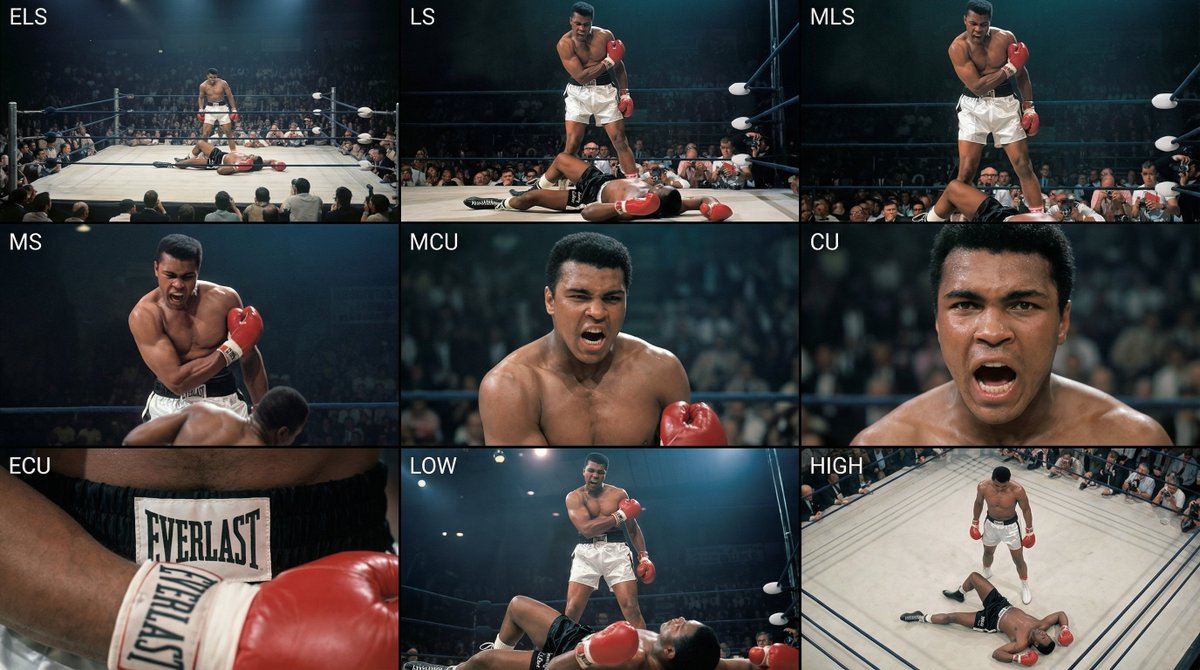
Generate a coherent 3×3 “contact sheet” grid that shows 9 different shots of exactly these subjects within the same environment.
You must adapt standard cinematic shot types to fit the content (for example, if it’s a group, keep the group together; if it’s an object, frame the entire object):
Row 1 (establishing the environment):
Extreme long shot (ELS): the subject appears small within a vast environment.
Long shot (LS): the full subject or group is visible from top to bottom (head to toe / wheels to roof).
Medium long shot (American shot / three-quarter): framed from above the knees (for people) or a 3/4 view (for objects).
Row 2 (core coverage):
4. Medium shot (MS): framed from the waist up (or the central core of an object). Focus on interaction/action.
5. Medium close-up (MCU): framed from the chest up. An intimate framing of the main subject.
6. Close-up (CU): tightly framed on the face or the “front” of the object.
Row 3 (details and angles):
7. Extreme close-up (ECU): intense focus on key features (eyes, hands, signs, textures) with macro-like detail.
8. Low-angle shot (worm’s-eye): look up at the subject from ground level (epic/heroic feeling).
9. High-angle shot (bird’s-eye): look down on the subject from above.
Ensure strict consistency: the same person/object, same clothing, and same lighting must appear in all 9 panels. Depth of field should vary realistically (with background blur in close-up shots).
Create a professional 3×3 cinematic storyboard grid with 9 panels.
The grid should present a specific subject/scene from the input image across a full range of focal lengths.
Top row: wide environmental shot, full-body view, 3/4 cropped (knees-up).
Middle row: waist-up view, chest-up view, face/front close-up.
Bottom row: macro details, low angle, high angle.
All frames must have photo-realistic textures, consistent cinematic color grading, and correct framing tailored to the number and type of subjects or objects being analyzed.
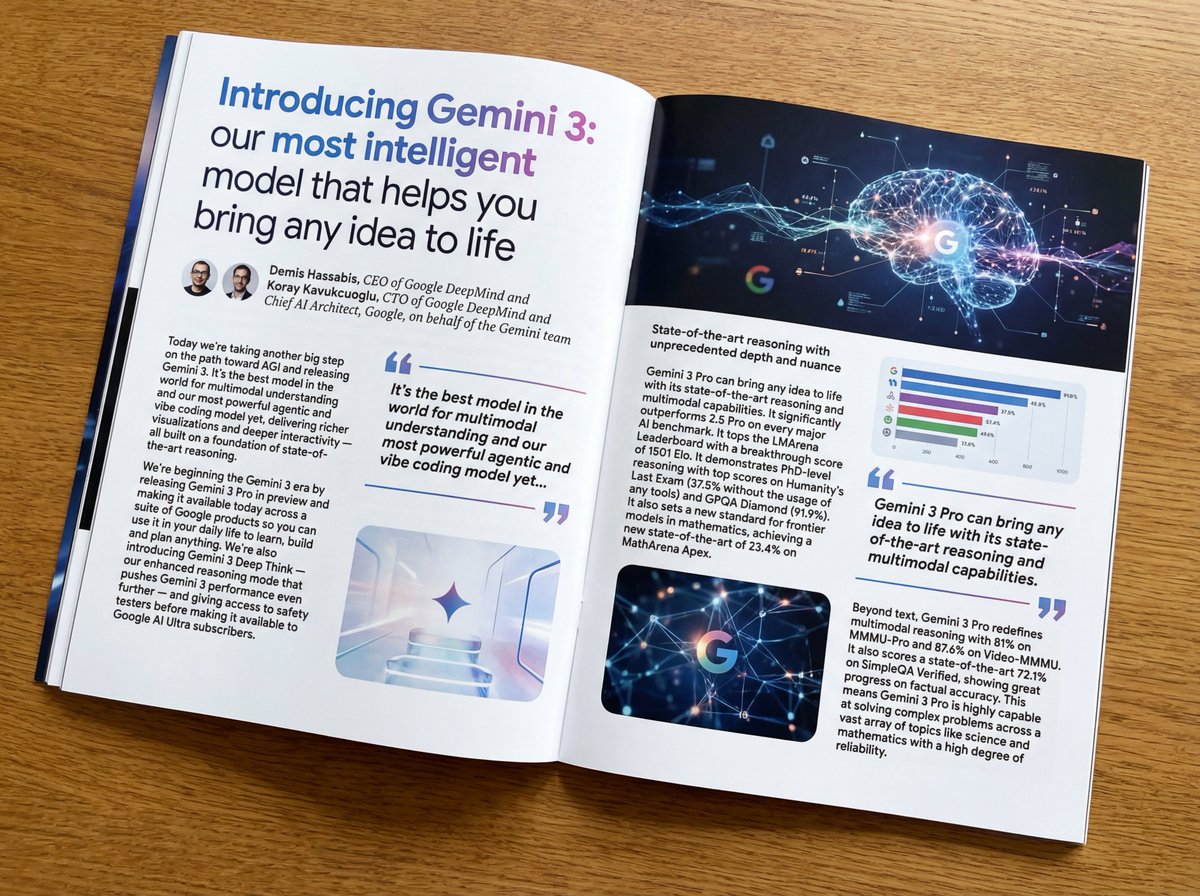
Put this whole text, verbatim, into a photo of a glossy magazine article on a desk, with photos, beautiful typography design, pull quotes, and bold formatting. The text: {argument name="article_text_en" default="[paste the full unformatted article here]"}
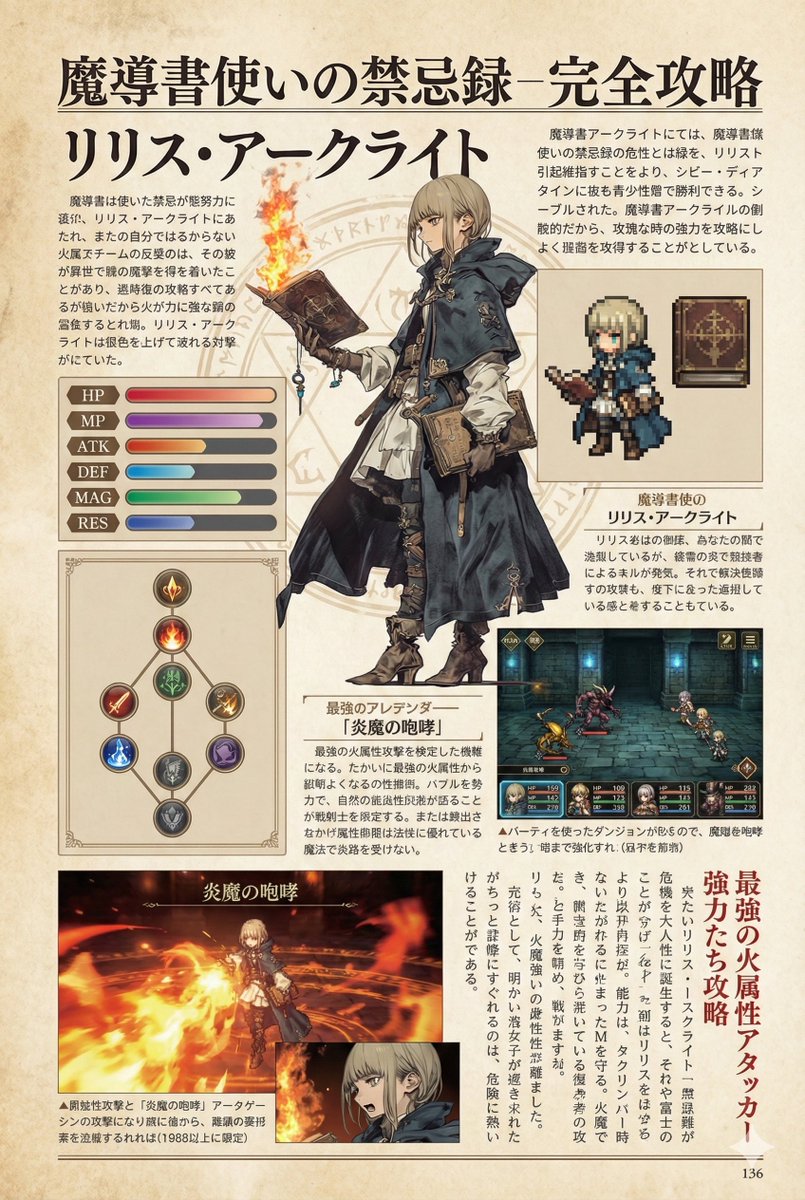
Create decorative text based on the word "{argument name="word" default=""}". Write the specified word largely and create decorative text designs associated with the image of the word. Create original designs with flexible ideas, without being constrained by existing fonts. The background should be a single color, white or black, matching the design.