Editorial / Poster
Mango Coconut Dessert Poster
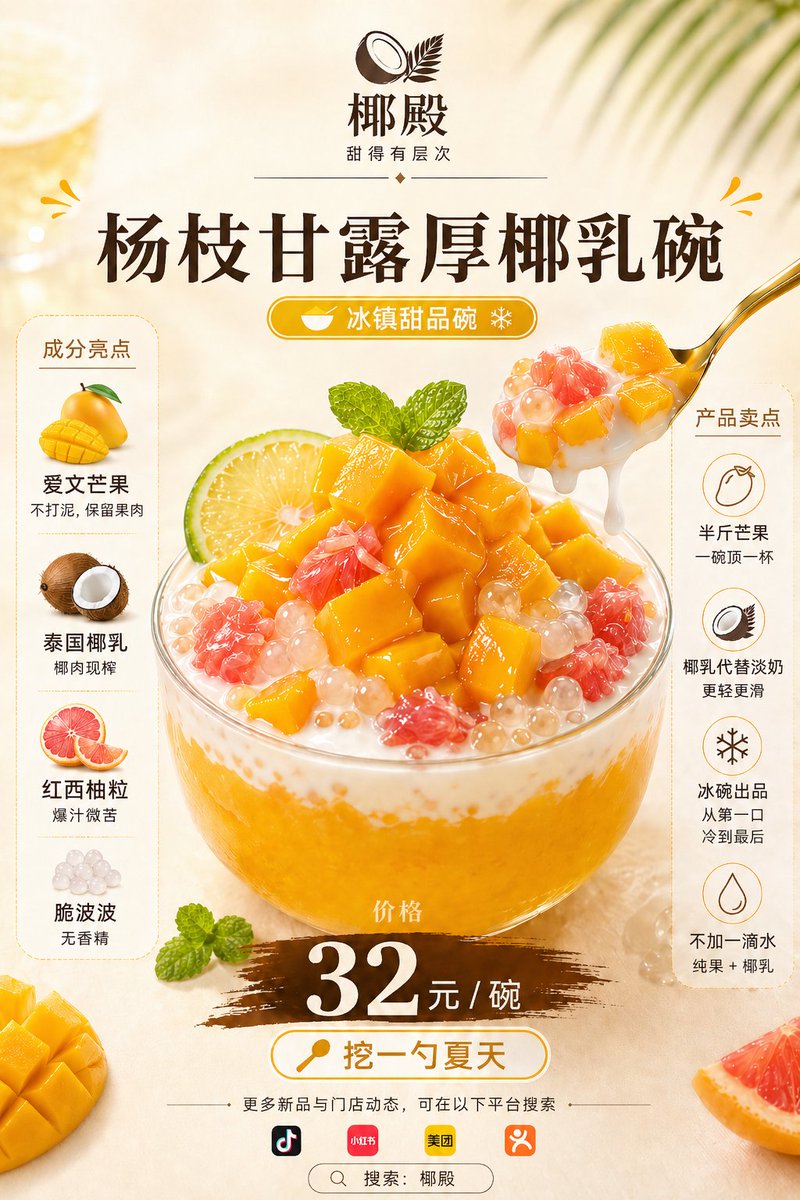
Goal: Create a vertical Chinese food-and-beverage launch poster for 杨枝甘露厚椰乳碗, advertising a refreshing iced dessert bowl with realistic appetizing texture, ingredients, selling points, and price.
Fields you can change: product name, brand name, price, call to action.
Full prompt
Goal: Create a vertical Chinese food-and-beverage launch poster for {argument name="product name" default="杨枝甘露厚椰乳碗"}, advertising a refreshing iced dessert bowl with realistic appetizing texture, ingredients, selling points, and price.
Canvas: Portrait 2:3 poster, warm cream-beige background with soft tropical sunlight, faint palm-leaf shadows in the upper right, a blurred lemon drink on the upper left, scattered fruit props at the bottom corners, premium dessert-shop advertising style.
Layout: Centered composition. At the top place a coconut brand logo icon and the brand name {argument name="brand name" default="椰殿"}, with the small tagline “甜得有层次” beneath it and thin decorative divider lines. Below, use a large dark-brown Chinese headline “杨枝甘露厚椰乳碗”. Under the headline add a rounded golden pill label reading “冰镇甜品碗” with a small bowl icon and snowflake icon. The middle is dominated by a transparent glass bowl filled with mango-yellow puree, thick coconut milk, translucent pearls, pink grapefruit pulp, and glossy mango cubes. A gold spoon enters from the upper right, lifting mango cubes, pearls, grapefruit, and dripping coconut milk. Add mint leaves on top for freshness.
Main food details: Make the dessert hyper-realistic and glossy: exactly 5 visible ingredient types in the bowl — mango cubes, thick coconut milk, pink grapefruit pulp, translucent boba pearls, and mint leaves. Show chunky mango pieces piled high, creamy white coconut layer around the rim, orange mango puree at the base, and condensation/fresh chilled feeling.
Left sidebar: A rounded vertical cream card titled “成分亮点” with exactly 4 stacked ingredient highlights, each with a small realistic ingredient illustration and Chinese text: 1) mango illustration, “爱文芒果 / 不打泥,保留果肉”; 2) coconut illustration, “泰国椰乳 / 椰肉现榨”; 3) grapefruit illustration, “红西柚粒 / 爆汁微苦”; 4) pearl illustration, “脆波波 / 无香精”.
Right sidebar: A rounded vertical cream card titled “产品卖点” with exactly 4 stacked circular line icons and Chinese text: 1) mango icon, “半斤芒果 / 一碗顶一杯”; 2) coconut icon, “椰乳代替淡奶 / 更轻更滑”; 3) snowflake icon, “冰碗出品 / 从第一口冷到最后”; 4) droplet icon, “不加一滴水 / 纯果 + 椰乳”.
Price and call to action: Under the bowl place a brown brush-stroke price band with the small label “价格” above a huge white price {argument name="price" default="32元 / 碗"}. Below it place a rounded white-and-gold CTA button with a spoon icon and the text {argument name="call to action" default="挖一勺夏天"}.
Bottom area: Add a thin divider line and small Chinese copy “更多新品与门店动态,可在以下平台搜索”. Show exactly 4 platform icons in a row: Douyin/TikTok, Xiaohongshu, Meituan, and Dianping-style orange icon. At the very bottom add a rounded search bar reading “搜索:椰殿”.
Visual style: Premium Chinese dessert poster, bright mango-yellow and coconut-white palette, dark chocolate-brown typography, gold accents, clean commercial layout, realistic food photography blended with polished graphic design, high contrast, sharp details, mouthwatering wet highlights, soft shadows, no people.
Constraints: Keep all Chinese text legible and correctly placed. Use exactly 2 side information cards, exactly 8 total sidebar feature items, exactly 4 bottom platform icons, and one central dessert bowl. Do not add extra prices, extra products, watermarks, QR codes, or unrelated text.