Editorial / Poster
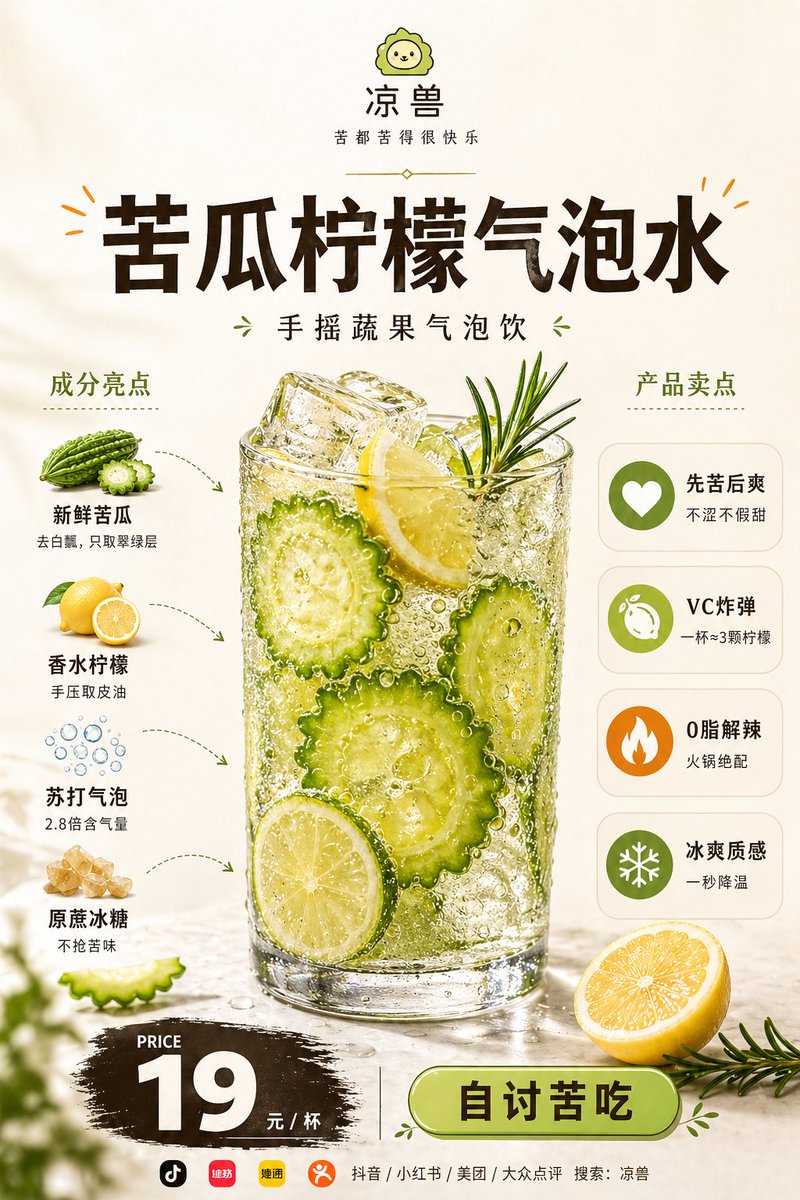
Bitter Melon Lemon Soda Poster
Goal: Create a vertical Chinese beverage launch poster for a restaurant drink, centered on a highly realistic glass of 苦瓜柠檬气泡水 with fresh ingredients, sales points, price, and ordering call-to-action.
Fields you can change: drink name, price.
Full prompt
Goal: Create a vertical Chinese beverage launch poster for a restaurant drink, centered on a highly realistic glass of {argument name="drink name" default="苦瓜柠檬气泡水"} with fresh ingredients, sales points, price, and ordering call-to-action.
Canvas: Portrait 3:4 food advertising poster, warm off-white/beige background, clean premium restaurant menu style, high-resolution commercial photography mixed with neat infographic labels. Use soft sunlight, dewy freshness, crisp bubbles, and appetizing realism.
Top brand area: At the very top center place a small cute green lion mascot logo, then the brand name “凉兽”, and the slogan “苦都苦得很快乐”. Add a thin decorative divider underneath.
Main headline: Large bold dark-brown Chinese title centered: “苦瓜柠檬气泡水”. Add small orange decorative burst marks near the title. Under it place the subtitle “手摇蔬果气泡饮” with small green leaf ornaments on both sides.
Central product hero: Place one tall transparent glass in the center, filled with sparkling pale yellow-green soda, many visible carbonation bubbles, large ice cubes, sliced bitter melon rounds, lemon slices, and a rosemary sprig sticking out of the top. The glass should look cold, wet, and refreshing with condensation and reflections. Add loose droplets on the tabletop.
Left ingredient section: Title “成分亮点”. Show exactly 4 ingredient items stacked vertically with small photoreal ingredient illustrations and dotted curved arrows pointing toward the glass: 1) bitter melon illustration labeled “新鲜苦瓜” with subtext “去白瓤,只取翠绿层”; 2) lemon illustration labeled “香水柠檬” with subtext “手压取皮油”; 3) bubble icon labeled “苏打气泡” with subtext “2.8倍含气量”; 4) rock sugar illustration labeled “原蔗冰糖” with subtext “不抢苦味”.
Right selling-points section: Title “产品卖点”. Show exactly 4 rounded white cards stacked vertically, each with a circular icon on the left and Chinese text on the right: 1) green heart icon, “先苦后爽” / “不涩不假甜”; 2) green lemon icon, “VC炸弹” / “一杯≈3颗柠檬”; 3) orange flame icon, “0脂解辣” / “火锅绝配”; 4) green snowflake icon, “冰爽质感” / “一秒降温”.
Bottom price and CTA: At bottom left, use a black brush-stroke price badge with small English “PRICE”, huge white “{argument name="price" default="19"}”, and “元 / 杯”. At bottom right, add a large rounded green button with dark text “自讨苦吃”. Separate price and button with a thin vertical line. Add a halved lemon and rosemary sprig near the bottom right foreground. Include subtle blurred green leaves at the bottom left foreground for depth.
Footer: Along the very bottom add small app/platform icons and text: “抖音 / 小红书 / 美团 / 大众点评 搜索:凉兽”.
Visual style: Fresh lemon-green and dark-brown palette, premium Chinese food poster layout, realistic food textures, sharp condensation, sparkling soda bubbles, clean typography, balanced negative space, no watermark, no extra products, no people.



