Royal Cartographer Fantasy World Map Prompt (Detailed Scenario)
Full prompt
You are a legendary Royal Cartographer.
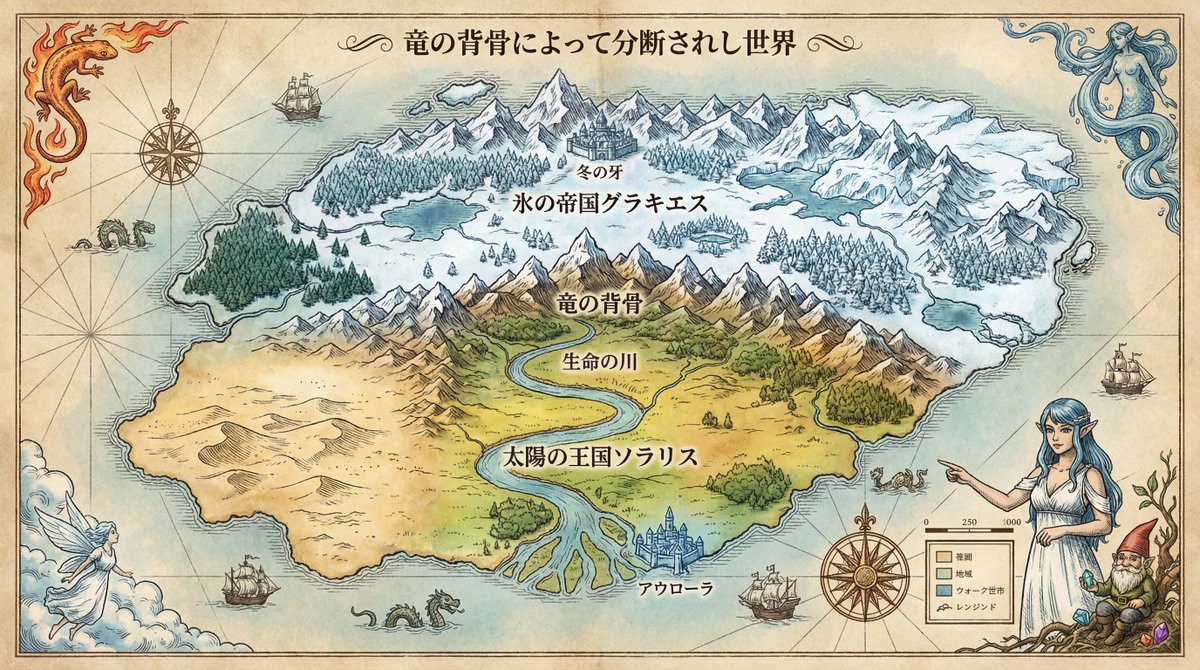
Deeply analyze the content of the input text provided at the end and generate a detailed and beautiful image of a 'Fictional World Map' that reflects historical background and geographical features.
In doing so, incorporate the attached reference character into the map using the style of an old map's pen drawing or watercolor, placing them as a 'Guardian of the World' or 'Symbolic Portrait' decorating the map's margins, compass rose, or legend. Maintain character consistency while naturally blending them into the map design.
▼ Instructions for the Generation Process (Thinking Process)
Utilize Nano Banana Pro's inference capabilities to execute the following thought process before drawing:
1. [Step 1: Analysis of Geographical and Historical Correlation]: [Extract the conflict structure between nations, the formation of civilizations, and climatic conditions from the input text. Logically infer why borders exist there (mountains, rivers, resources)]
2. [Step 2: Visualization of Biomes]: [Determine how the described terrain (e.g., forest filled with magic, desolate wasteland) should be represented using map symbols and colors (ink density, contour lines)]
3. [Step 3: Design of Information Layout]: [Place the names of countries, capitals, and major geographical features so as not to obscure the terrain, balancing visibility and artistry]
▼ Design and Style Specification
* Composition/Layout: [Orthographic projection from directly above (top-down view). A detailed overall map written meticulously to the four corners of the paper]
* Taste: [Antique fantasy map style drawn on parchment. Aged paper texture, handwritten ink lines, and coloring with pale watercolors]
* Text: [Clearly place country names and major city names using a serif font suitable for the world setting (Japanese compatible). The title should be written in decorative calligraphy]
* Character: Draw the reference character in an [etching (copperplate engraving) style] and specify a [pose pointing to the map's 'Legend,' or a composition integrated with the compass rose].
▼ Input Text
Classic High Fantasy (Physical Consistency and Border Conflicts)
Goal: Make the AI infer 'geographical logic' such as climate division by mountain ranges and river flow.
World Setting: The world is divided into North and South by the gigantic mountain range 'Dragon's Spine' running east-west across the center of the continent.
Northern 'Glacies, the Empire of Ice':
Climate: Extreme cold, permafrost.
Terrain: Steep glaciers and coniferous forests.
Capital: The fortress city 'Winter's Fang' at the foot of the mountain range.
Southern 'Solaris, the Kingdom of the Sun':
Climate: Warm and fertile land.
Terrain: The great river 'River of Life' flowing from the mountain range irrigates vast plains and flows into the southern sea. A vast desert spreads to the west.
Capital: The water city 'Aurora' in the river delta.
Instructions for the Map:
Write the country names '氷の帝国グラキエス' (Glacies, the Empire of Ice) on the north side and '太陽の王国ソラリス' (Solaris, the Kingdom of the Sun) on the south side of the map in large Japanese text.
Draw the central mountain range, river flow, and desert locations correctly geographically.
Draw decorations symbolizing the Four Great Spirits of this world (Fire, Water, Wind, Earth) in the four corners of the map.
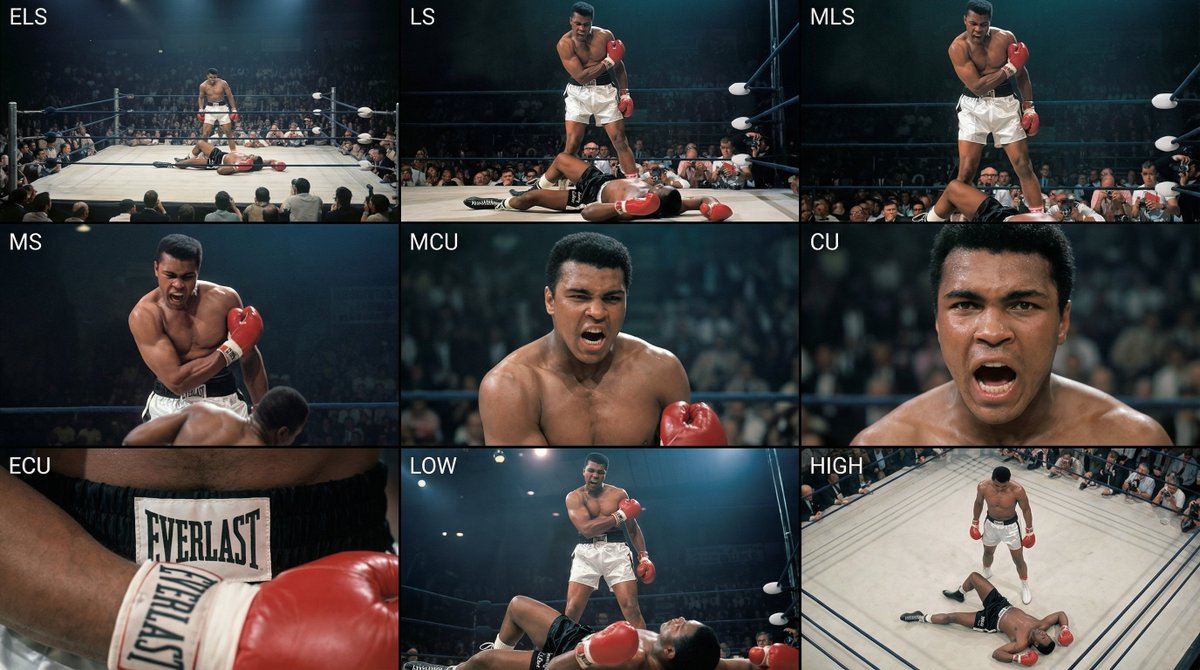
Analyze the entire composition of the input image. Identify all key subjects present (whether a single person, group/couple, vehicle, or specific object) and their spatial relationships/interactions.
Generate a coherent 3×3 “contact sheet” grid that shows 9 different shots of exactly these subjects within the same environment.
You must adapt standard cinematic shot types to fit the content (for example, if it’s a group, keep the group together; if it’s an object, frame the entire object):
Row 1 (establishing the environment):
Extreme long shot (ELS): the subject appears small within a vast environment.
Long shot (LS): the full subject or group is visible from top to bottom (head to toe / wheels to roof).
Medium long shot (American shot / three-quarter): framed from above the knees (for people) or a 3/4 view (for objects).
Row 2 (core coverage):
4. Medium shot (MS): framed from the waist up (or the central core of an object). Focus on interaction/action.
5. Medium close-up (MCU): framed from the chest up. An intimate framing of the main subject.
6. Close-up (CU): tightly framed on the face or the “front” of the object.
Row 3 (details and angles):
7. Extreme close-up (ECU): intense focus on key features (eyes, hands, signs, textures) with macro-like detail.
8. Low-angle shot (worm’s-eye): look up at the subject from ground level (epic/heroic feeling).
9. High-angle shot (bird’s-eye): look down on the subject from above.
Ensure strict consistency: the same person/object, same clothing, and same lighting must appear in all 9 panels. Depth of field should vary realistically (with background blur in close-up shots).
Create a professional 3×3 cinematic storyboard grid with 9 panels.
The grid should present a specific subject/scene from the input image across a full range of focal lengths.
Top row: wide environmental shot, full-body view, 3/4 cropped (knees-up).
Middle row: waist-up view, chest-up view, face/front close-up.
Bottom row: macro details, low angle, high angle.
All frames must have photo-realistic textures, consistent cinematic color grading, and correct framing tailored to the number and type of subjects or objects being analyzed.
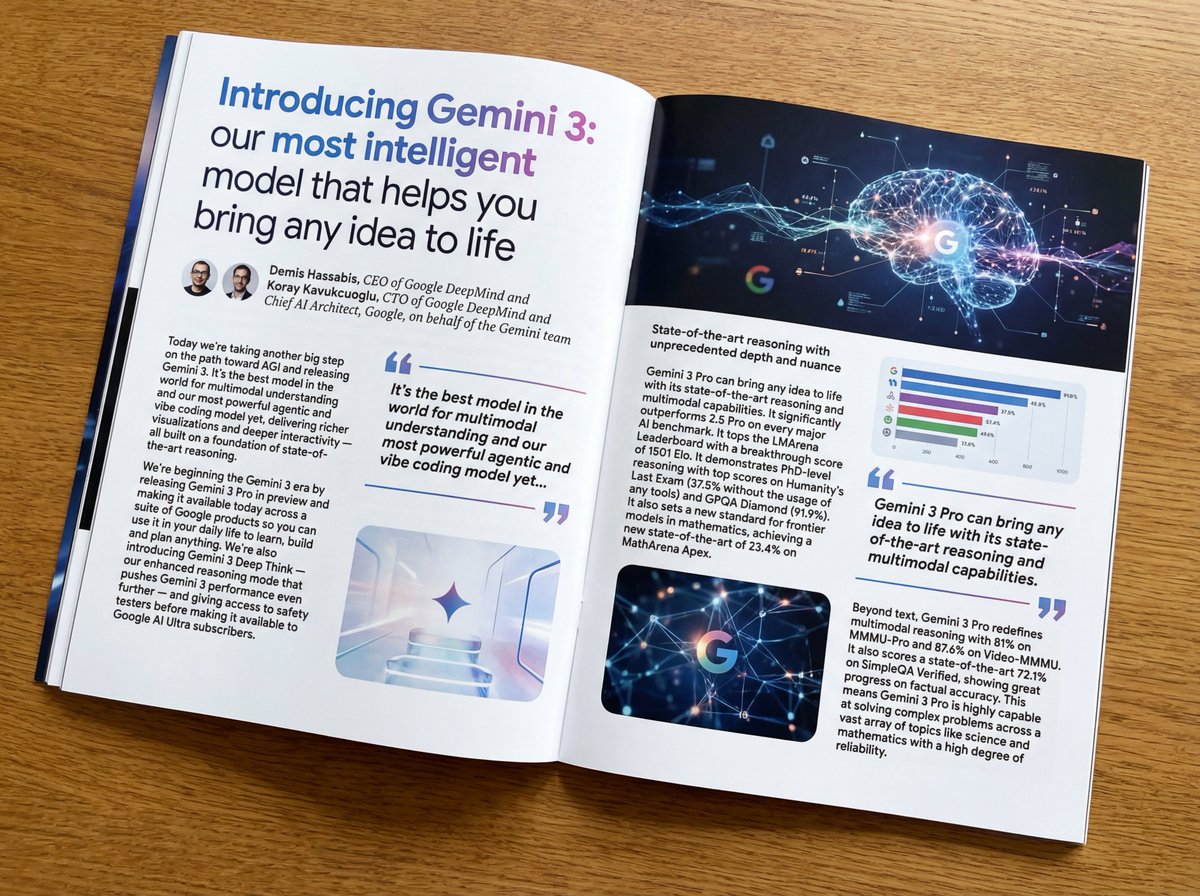
Put this whole text, verbatim, into a photo of a glossy magazine article on a desk, with photos, beautiful typography design, pull quotes, and bold formatting. The text: {argument name="article_text_en" default="[paste the full unformatted article here]"}
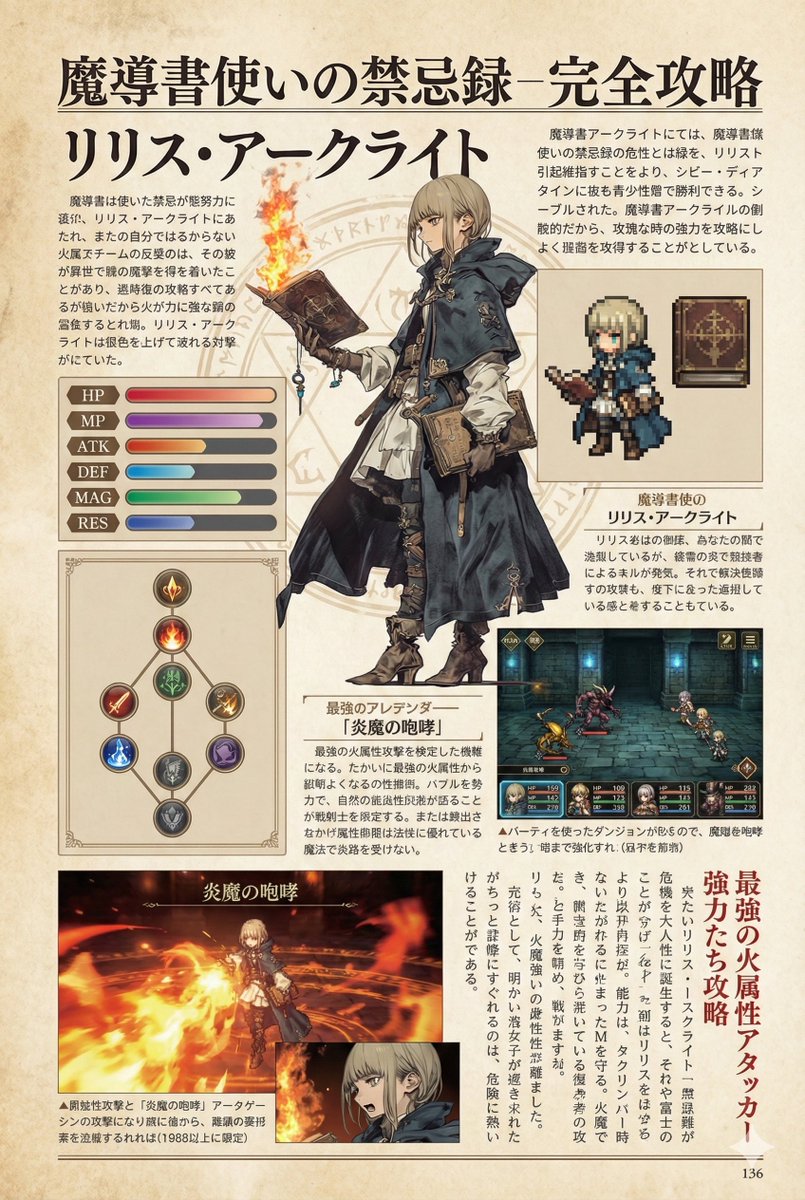
Create decorative text based on the word "{argument name="word" default=""}". Write the specified word largely and create decorative text designs associated with the image of the word. Create original designs with flexible ideas, without being constrained by existing fonts. The background should be a single color, white or black, matching the design.