Editorial / Poster
Minimalist Flat Vector Travel Poster
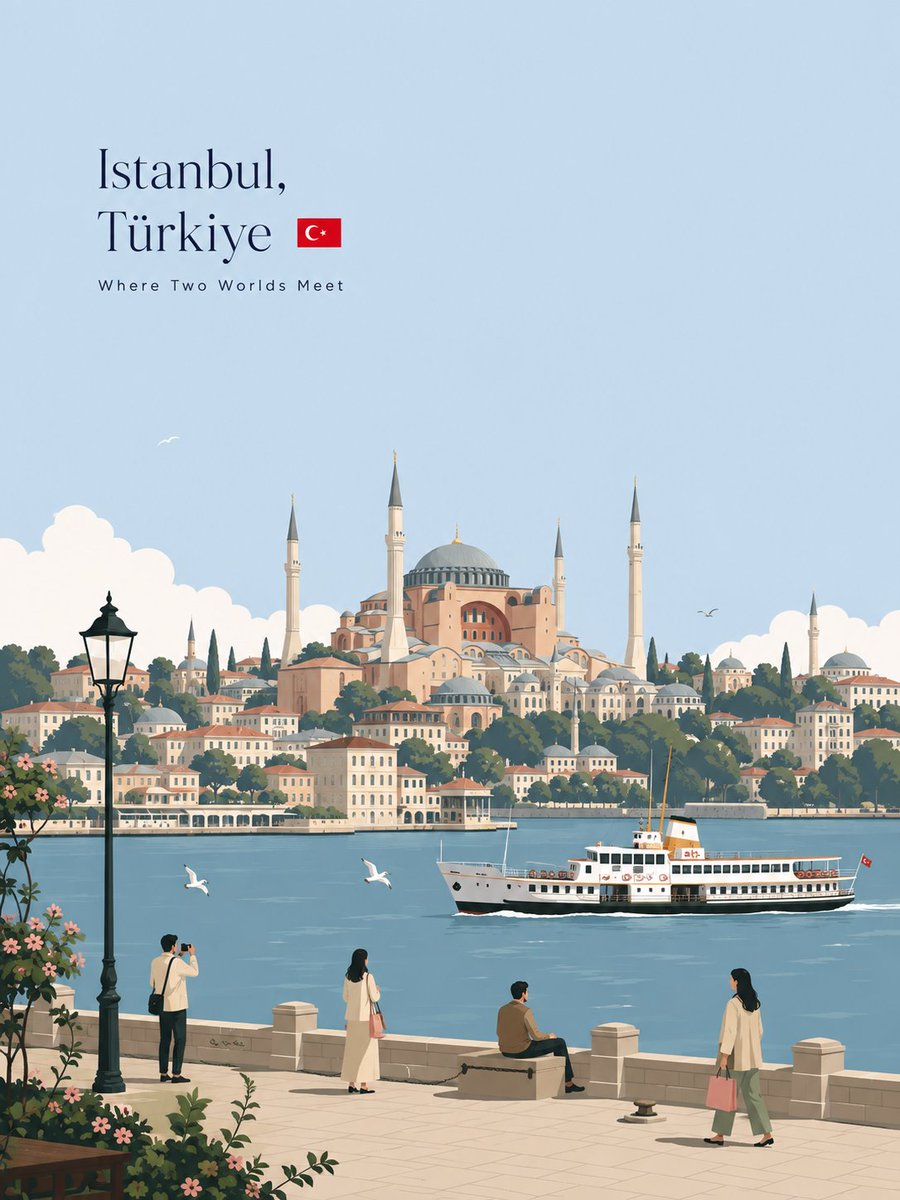
Premium minimalist flat-vector travel poster for [CITY_NAME], 3:4 vertical format. Design an original, sophisticated travel poster that captures the authentic visual personality of [CITY_NAME].
Fields you can change: city name.
Full prompt
Premium minimalist flat-vector travel poster for {argument name="city name" default="[CITY_NAME]"}, 3:4 vertical format.
Design an original, sophisticated travel poster that captures the authentic visual personality of [CITY_NAME]. The composition must feel purpose-built for this city rather than following a reusable template.
CITY IDENTITY
First interpret the unique visual character of [CITY_NAME] and build the scene around these five elements:
1. A recognizable landmark, architectural feature, or skyline element.
2. A distinctive local way of moving through the city.
3. One subtle everyday lifestyle moment.
4. A native plant, landscape, or environmental characteristic.
5. A composition and viewpoint that naturally belongs to the city.
The overall scene structure must change from city to city. Do not repeatedly use the same object positions or visual formula.
Possible compositions include:
harbor viewpoint, narrow historic lane, riverside garden, coastal path, elevated city overlook, lively market passage, tram avenue, ferry terminal, botanical setting, heritage square, beach promenade, cultural plaza, or skyline terrace.
Choose whichever composition best represents [CITY_NAME].
TYPOGRAPHY
Place “[CITY_NAME]” in the upper-left area with generous clean negative space.
Add one short, sophisticated English tagline inspired by the atmosphere of the city.
Typography should feel understated, editorial, spacious, and premium. Never allow text to dominate the artwork.
VISUAL HIERARCHY
Use one iconic landmark or architectural feature as the main focal point.
Support it with only 2–4 carefully selected local elements. Every added detail should strengthen the sense of place.
Avoid landmark collections or postcard-style collages. Keep the scene visually quiet and intentional.
PEOPLE
Include only 3–6 small-scale figures.
Give each person a believable activity connected to local life, such as:
walking through a historic lane, cycling, waiting for public transport, sketching architecture, boarding a ferry, reading outdoors, taking a quiet photograph, carrying beach equipment, browsing a market, or jogging beside the water.
Avoid crowds and avoid making any single person the main character. Figures should integrate naturally into the environment.
LOCAL CHARACTER
Use city-specific elements only when they genuinely fit [CITY_NAME]:
- local transportation
- architecture
- street furniture
- vegetation
- small signs or wayfinding
- local food references
- recreational activities
- pavement markings
- cultural details
Transport and signage should remain subtle. Instead of always using a large signboard, incorporate details naturally through a small transit marker, station clock, ferry information panel, bike symbol, painted road marking, beach flag, or understated metro icon.
ART DIRECTION
Japanese stationery-inspired aesthetic,
luxury sticker illustration,
premium commercial vector artwork,
modern editorial travel branding,
clean delica