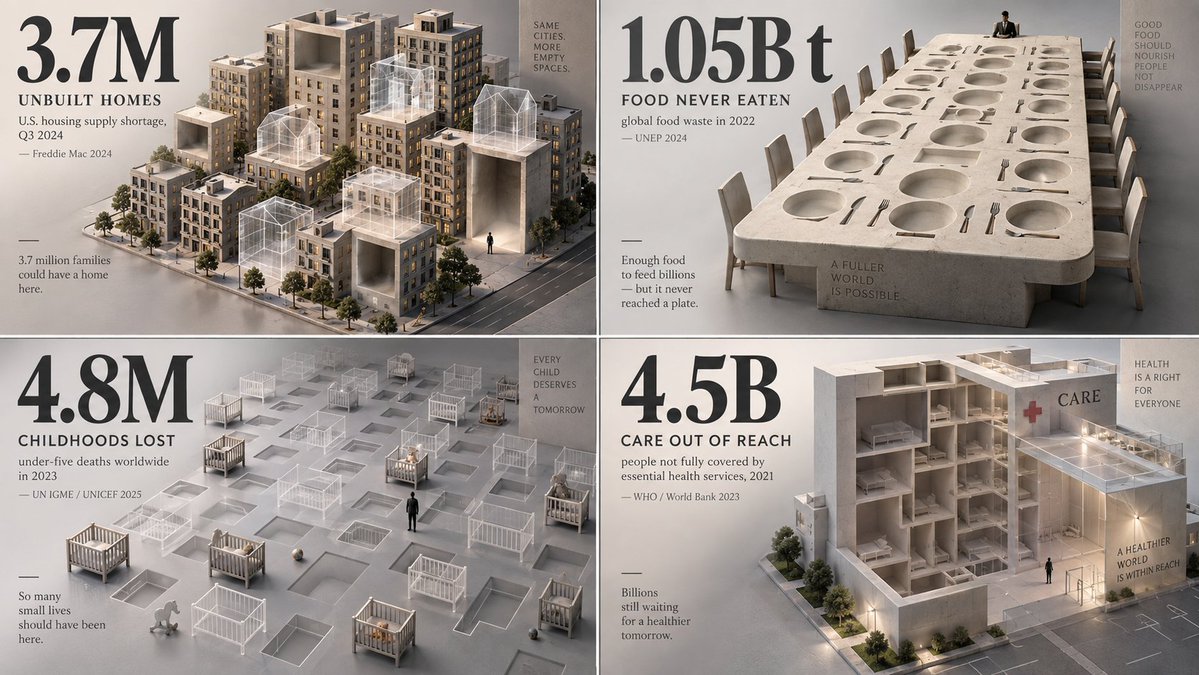
2x2 grid, 16:9, AI infers viral topics: Create a haunting, minimalist 3D visualization that represents what is missing, lost, avoided, delayed, or erased because of [TOPIC].
Fields you can change: topic.
Full prompt
2x2 grid, 16:9, AI infers viral topics: Create a haunting, minimalist 3D visualization that represents what is missing, lost, avoided, delayed, or erased because of {argument name="topic" default="[TOPIC]"}. The AI should choose a statistic involving loss: missing sleep, lost time, extinct species, unbuilt homes, unpaid wages, wasted food, lost attention, preventable deaths, disappearing land, delayed care, or unrealized potential. Instead of showing the object directly, represent it as negative space: empty chairs, ghost outlines, hollow cubes, missing city blocks, erased silhouettes, transparent containers, absent books, unfilled beds, or a carved-out void in a solid mass. The missing quantity should feel physically present through absence. Style: museum-grade isometric 3D render, matte clay and translucent materials, soft directional lighting, quiet shadows, neutral grey backdrop. Use one oversized numeral as a solemn anchor. Caption: what is missing, time period, metric, and source year. Add a tiny human silhouette for emotional scale. The spirit: make absence feel heavier than presence.
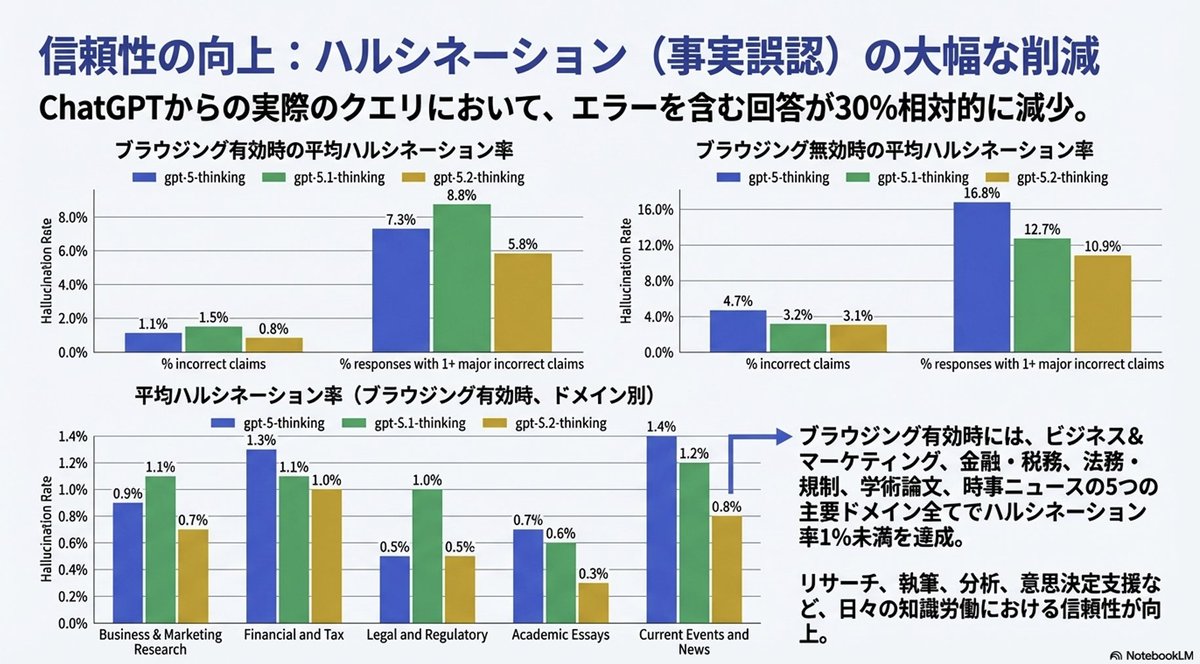
Completely reproduce the attached image as a single slide in a pptx file.
Make the text fully editable, and crop and use the diagrams and graphs from the original image as they are.
Generate an image that clearly summarizes the following {argument name="news_source_en" default="Yahoo News"} article in a single slide, using diagrams and illustrations.
---
{argument name="news_body_en" default="{paste the Yahoo News article here}"}
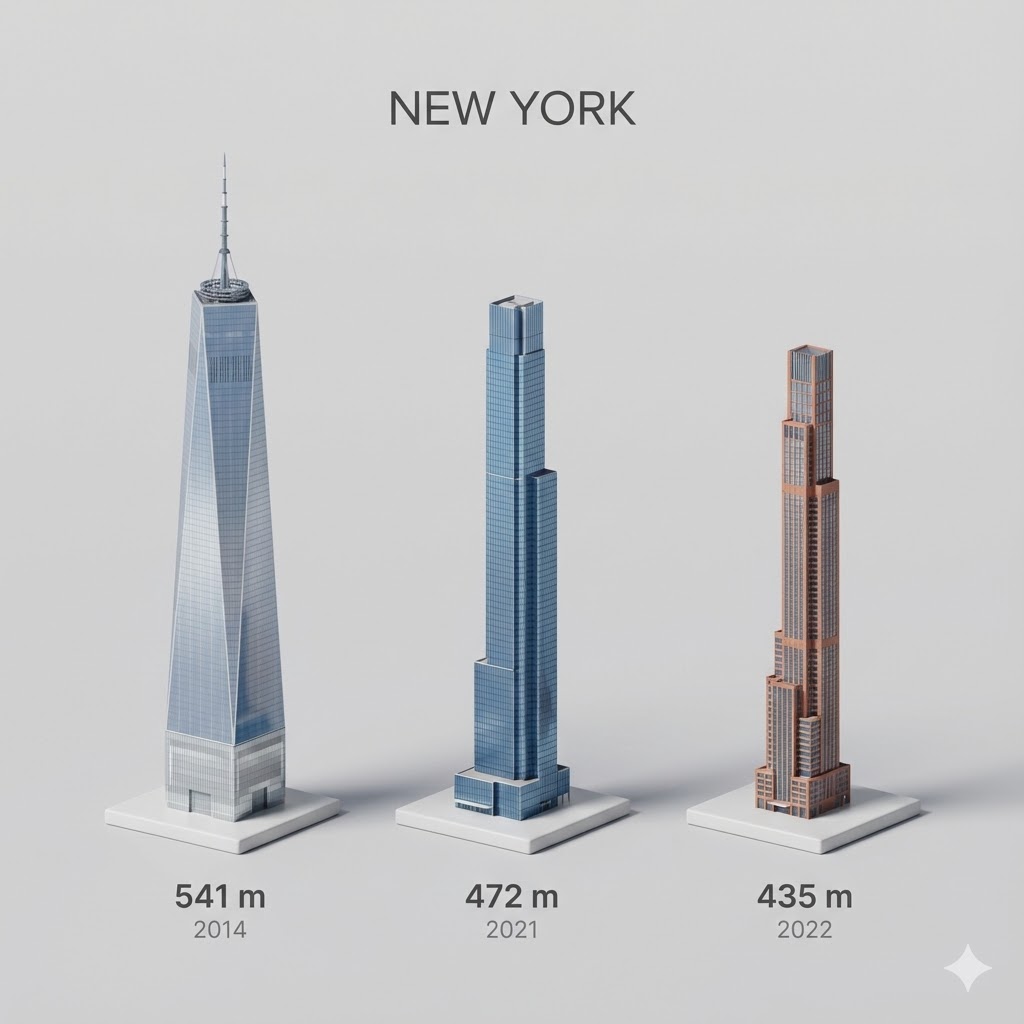
Present a clear, side miniature 3D cartoon view of the tallest buildings in {argument name="city in English" default="YOUR CITY"}. Use minimal textures with realistic materials and soft, lifelike lighting and shadows. Use a clean, minimalistic composition showing exactly the three tallest buildings in {argument name="reference city in English" default="Sopot"}, arranged from left to right in strict descending height order. The tallest must appear visibly tallest, the second must be clearly shorter than the first, and the third must be clearly shorter than the second.
All buildings must follow accurate relative proportions: if a building is taller in real life, it must be taller in the image by the same approximate ratio. No building may be visually stretched or compressed.
Each building should stand separately on a thin, simple ceramic base. Below each base, centered text should display:
Height in meters — semibold sans-serif, medium size
Year built — lighter-weight sans-serif, smaller size, directly beneath the height text
Provide consistent padding, spacing, leading, and kerning. Write “{argument name="city name title" default="YOUR CITY NAME"}” centered above the buildings, using a medium-sized sans-serif font.
No building top should overlap or touch the text above. Use accurate architectural proportions based on real-world references. Maintain a consistent camera angle and identical scale for each building model.
No forced perspective. Use straight-on orthographic-style rendering. Do not exaggerate or stylize size differences beyond proportional accuracy.
Use a square 1080×1080 composition. Use a clean, neutral background. Ensure no extra objects are present.
I want an illustrated diagram explaining the roles of dopamine and D2 receptors in the synaptic cleft between neurons, and how they relate to schizophrenia. Antipsychotic drugs exert their effects by blocking D2 receptors. Please diagram this for the three cases: healthy person | hallucination and delusion state | under antipsychotic medication. Generate a horizontally oriented image.