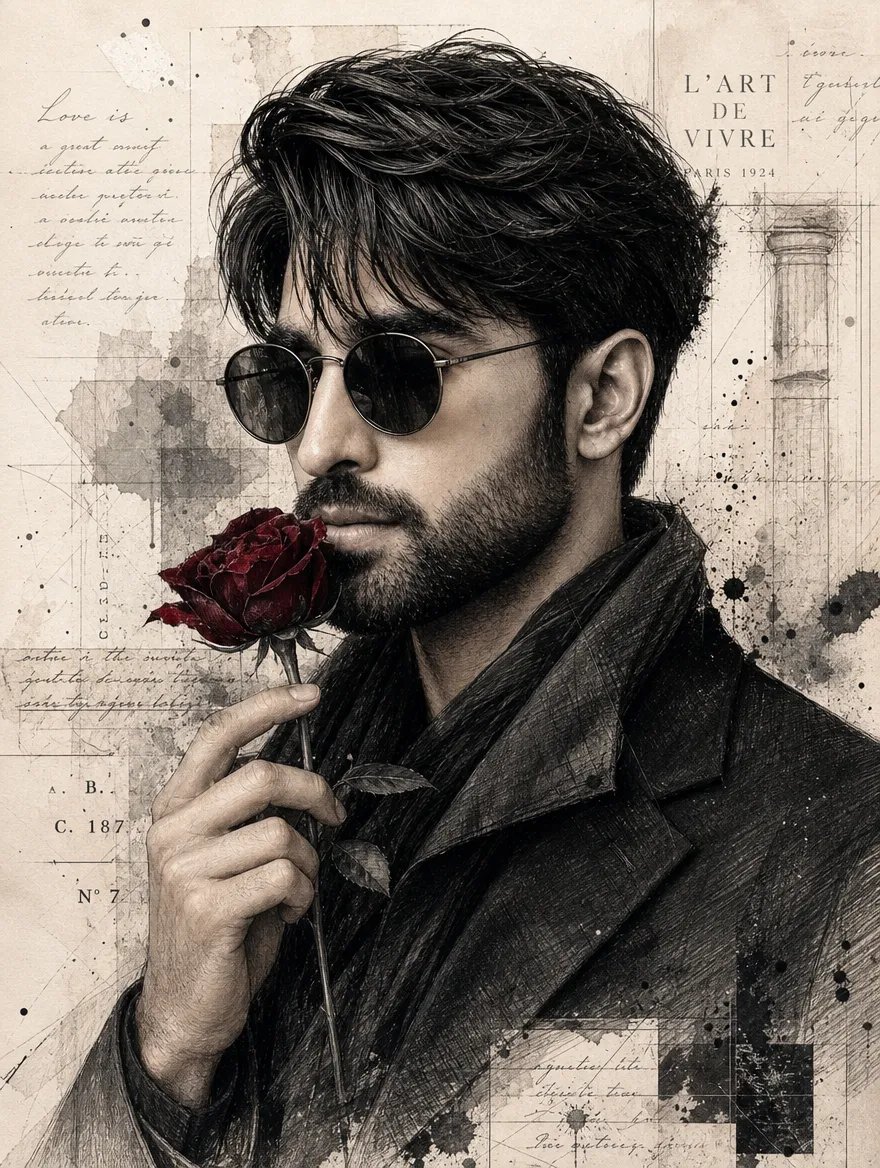
Create a highly detailed editorial mixed-media portrait of a stylish young man, matching the reference composition and visual aesthetic.
Full prompt
Create a highly detailed editorial mixed-media portrait of a stylish young man, matching the reference composition and visual aesthetic. SUBJECT: A handsome young man shown in a left-facing side-profile / three-quarter profile, with neatly styled voluminous dark black hair swept back slightly off his forehead, a full groomed beard and mustache, wearing round wire-frame sunglasses with dark lenses, and dressed in a textured charcoal-black jacket or coat with a popped collar. He holds a single deep red rose by its stem near his chin with one hand, fingers delicately wrapped around the thorny stem. STYLE & COMPOSITION: Editorial fashion illustration meets vintage collage art. The background is aged parchment paper overlaid with faded French typographic elements including 'L'ART DE VIVRE PARIS 1924', cursive script fragments like 'Love is a great secret...', technical blueprint lines, ink splatters, watercolor stains, and torn paper edges creating a layered grunge texture. The subject blends seamlessly into this mixed-media backdrop with visible pencil sketching textures on the clothing and skin shading. COLOR PALETTE: Desaturated sepia tones for the background and monochrome greys for the figure, contrasted sharply by the rich crimson red of the rose petals. LIGHTING: Soft directional studio lighting highlighting facial structure and fabric folds while maintaining an overall muted vintage atmosphere.
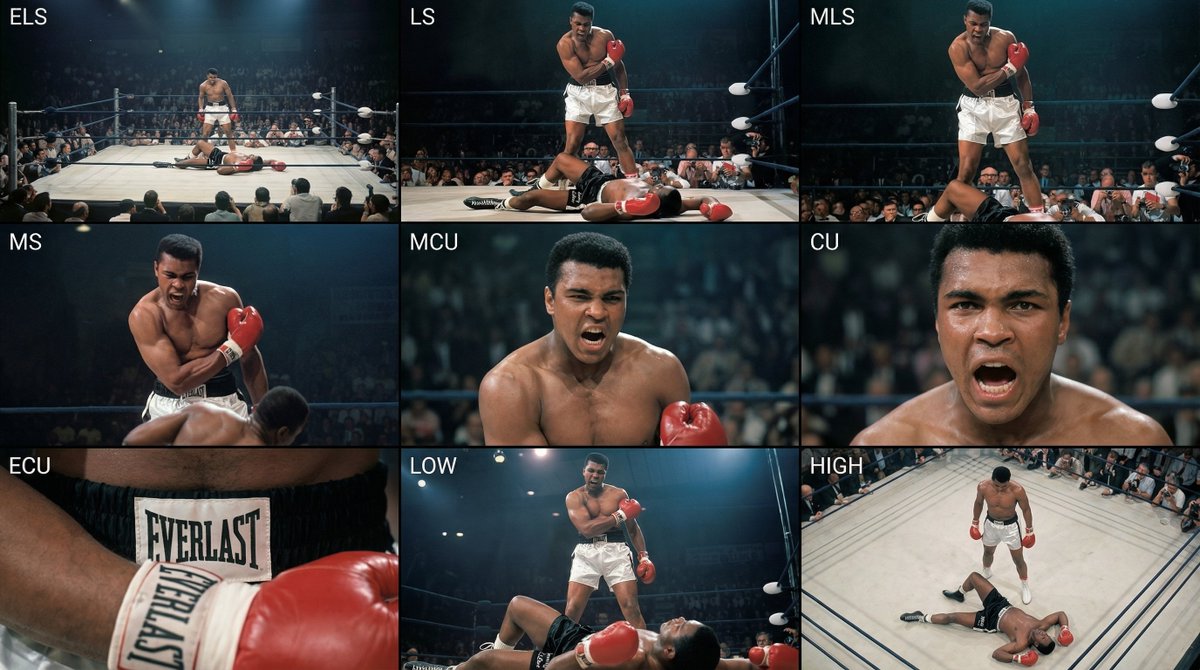
Analyze the entire composition of the input image. Identify all key subjects present (whether a single person, group/couple, vehicle, or specific object) and their spatial relationships/interactions.
Generate a coherent 3×3 “contact sheet” grid that shows 9 different shots of exactly these subjects within the same environment.
You must adapt standard cinematic shot types to fit the content (for example, if it’s a group, keep the group together; if it’s an object, frame the entire object):
Row 1 (establishing the environment):
Extreme long shot (ELS): the subject appears small within a vast environment.
Long shot (LS): the full subject or group is visible from top to bottom (head to toe / wheels to roof).
Medium long shot (American shot / three-quarter): framed from above the knees (for people) or a 3/4 view (for objects).
Row 2 (core coverage):
4. Medium shot (MS): framed from the waist up (or the central core of an object). Focus on interaction/action.
5. Medium close-up (MCU): framed from the chest up. An intimate framing of the main subject.
6. Close-up (CU): tightly framed on the face or the “front” of the object.
Row 3 (details and angles):
7. Extreme close-up (ECU): intense focus on key features (eyes, hands, signs, textures) with macro-like detail.
8. Low-angle shot (worm’s-eye): look up at the subject from ground level (epic/heroic feeling).
9. High-angle shot (bird’s-eye): look down on the subject from above.
Ensure strict consistency: the same person/object, same clothing, and same lighting must appear in all 9 panels. Depth of field should vary realistically (with background blur in close-up shots).
Create a professional 3×3 cinematic storyboard grid with 9 panels.
The grid should present a specific subject/scene from the input image across a full range of focal lengths.
Top row: wide environmental shot, full-body view, 3/4 cropped (knees-up).
Middle row: waist-up view, chest-up view, face/front close-up.
Bottom row: macro details, low angle, high angle.
All frames must have photo-realistic textures, consistent cinematic color grading, and correct framing tailored to the number and type of subjects or objects being analyzed.
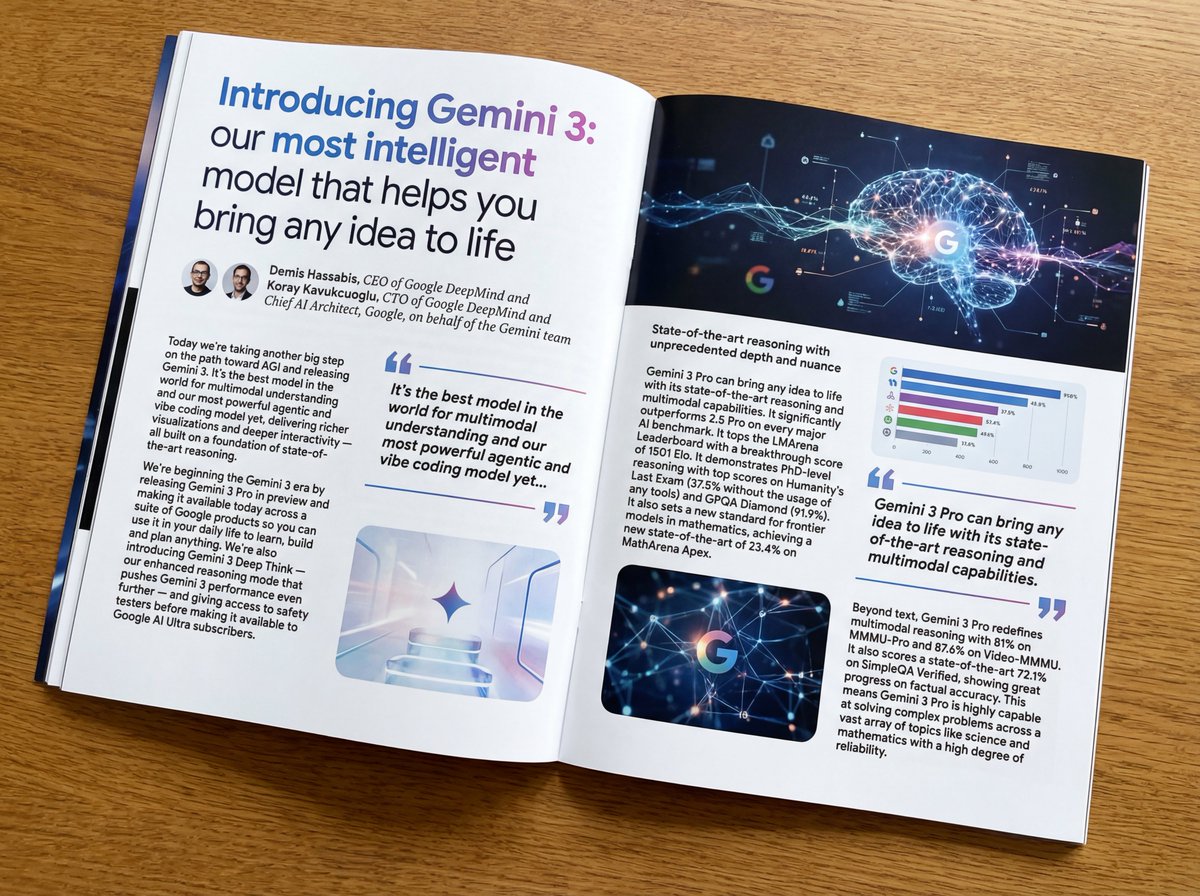
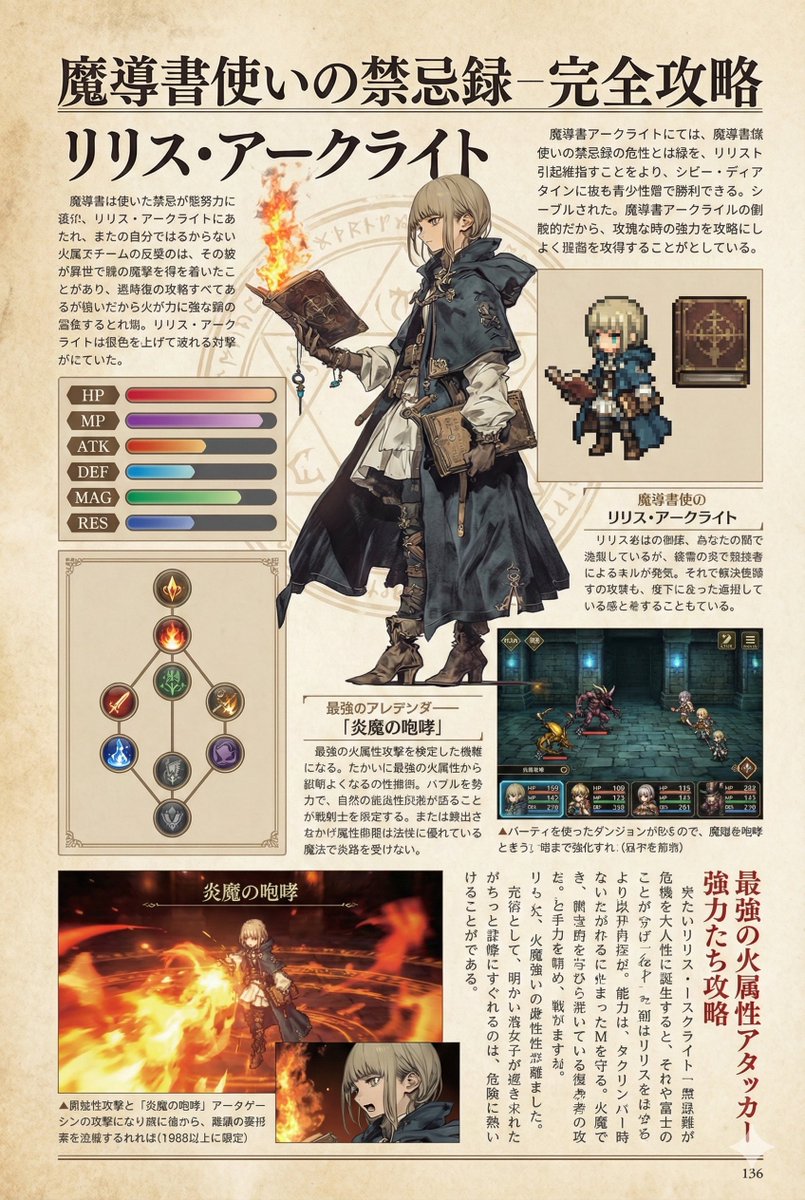
Put this whole text, verbatim, into a photo of a glossy magazine article on a desk, with photos, beautiful typography design, pull quotes, and bold formatting. The text: {argument name="article_text_en" default="[paste the full unformatted article here]"}
Create decorative text based on the word "{argument name="word" default=""}". Write the specified word largely and create decorative text designs associated with the image of the word. Create original designs with flexible ideas, without being constrained by existing fonts. The background should be a single color, white or black, matching the design.