Editorial / Poster
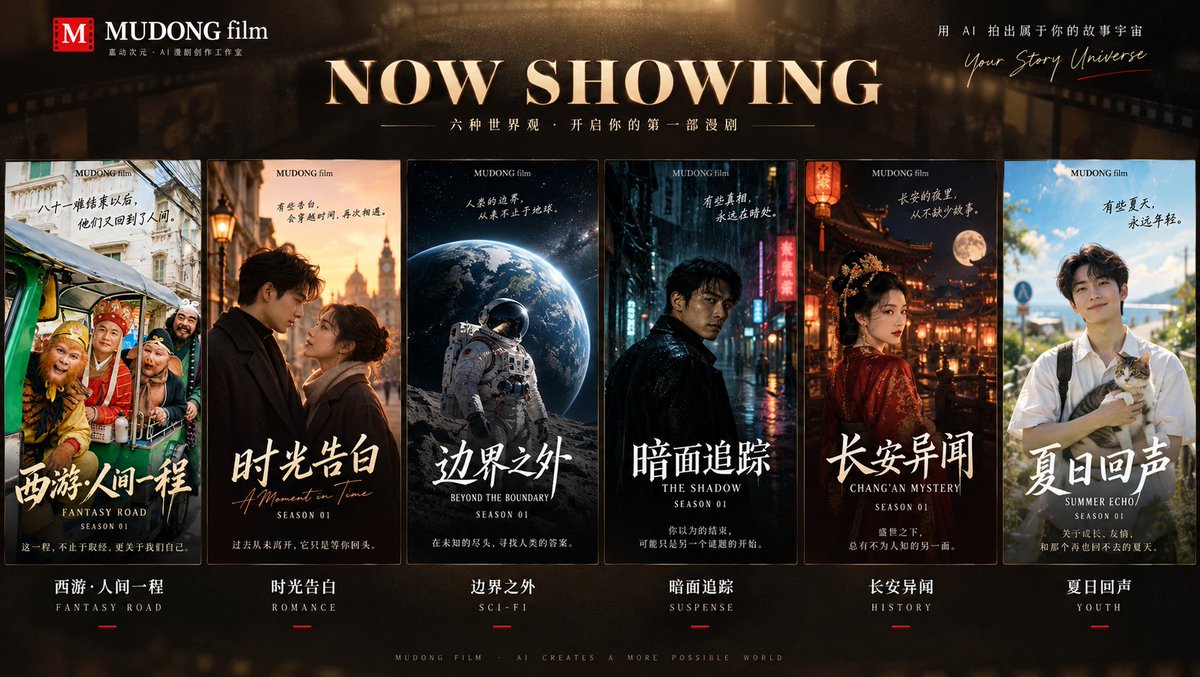
Cinematic AI Story Universe Poster
Goal: Create a cinematic streaming-platform landing poster for MUDONG film, presenting an anthology of AI-generated story universes as a premium movie-theater “now showing” showcase.
Fields you can change: studio name.
Full prompt
Goal: Create a cinematic streaming-platform landing poster for {argument name="studio name" default="MUDONG film"}, presenting an anthology of AI-generated story universes as a premium movie-theater “now showing” showcase.
Canvas: Wide 16:9 horizontal banner, dark warm-black background with blurred film reels, golden dust, soft spotlight glow, and subtle vignette. Overall mood is luxurious, dramatic, cinematic, and theatrical.
Header: Top left contains a red square filmstrip-style logo with a white “M”, followed by the studio name “MUDONG film” in elegant serif type and a small Chinese subtitle beneath it. Top center has a very large metallic gold serif headline: “NOW SHOWING”. Under it, add a thin horizontal divider and the Chinese tagline “六种世界观 · 开启你的第一部漫剧”. Top right contains small Chinese copy “用 AI 拍出属于你的故事宇宙” and a cursive English phrase “Your Story Universe”.
Main layout: Arrange exactly 6 tall vertical movie posters in one row across the center, each with a thin gold border, realistic cinematic photography, small “MUDONG film” label at the top, Chinese quote text near the top, a large Chinese title near the bottom, a smaller English title, “SEASON 01”, and a short Chinese description line at the bottom. Posters should be evenly spaced and aligned on a common baseline.
The 6 posters, left to right, are:
1. “西游·人间一程” / “FANTASY ROAD” — fantasy comedy road-trip scene with Journey to the West inspired characters riding in a small green vehicle through a European street; colorful costumes, Monkey King figure, monk-like character, playful adventure energy.
2. “时光告白” / “A Moment in Time” — romantic couple facing each other closely at sunset in a European city, warm orange light, soft bokeh, intimate emotional atmosphere.
3. “边界之外” / “BEYOND THE BOUNDARY” — science fiction astronaut standing on the moon or a rocky space surface, Earth huge in the background, star field, cold blue cinematic lighting.
4. “暗面追踪” / “THE SHADOW” — suspense thriller with a serious young man in a dark rainy neon alley, wet hair, cyber-noir city lights, blue and red reflections, mysterious tone.
5. “长安异闻” / “CHANG’AN MYSTERY” — historical mystery with an elegant Tang-dynasty-style woman in ornate red costume and hair ornaments, ancient Chinese street at night, lanterns, temple rooftops, full moon.
6. “夏日回声” / “SUMMER ECHO” — youthful summer drama with a smiling young man holding a cat near a bright seaside town, blue sky, sunlight, gentle nostalgic feeling.
Footer: Beneath the six posters, place exactly 6 corresponding category labels aligned under each poster: “西游·人间一程 / FANTASY ROAD”, “时光告白 / ROMANCE”, “边界之外 / SCI-FI”, “暗面追踪 / SUSPENSE”, “长安异闻 / HISTORY”, and “夏日回声 / YOUTH”. Under each category add a small short red underline accent. At the very bottom center, include tiny spaced-out text: “MUDONG FILM · AI CREATES A MORE POSSIBLE WORLD”.
Visual style: Ultra-polished premium film marketing design, realistic poster art, dramatic lighting, gold serif typography, high contrast, black-and-gold palette, subtle red accents, clean symmetrical spacing, professional streaming-service hero banner.
Constraints: Use exactly 6 poster cards and exactly 6 footer category labels. Keep all Chinese and English titles readable. Do not add extra posters, extra characters outside the poster images, watermarks, UI controls, or unrelated text.