Editorial / Poster
Premium Futuristic Automotive Poster
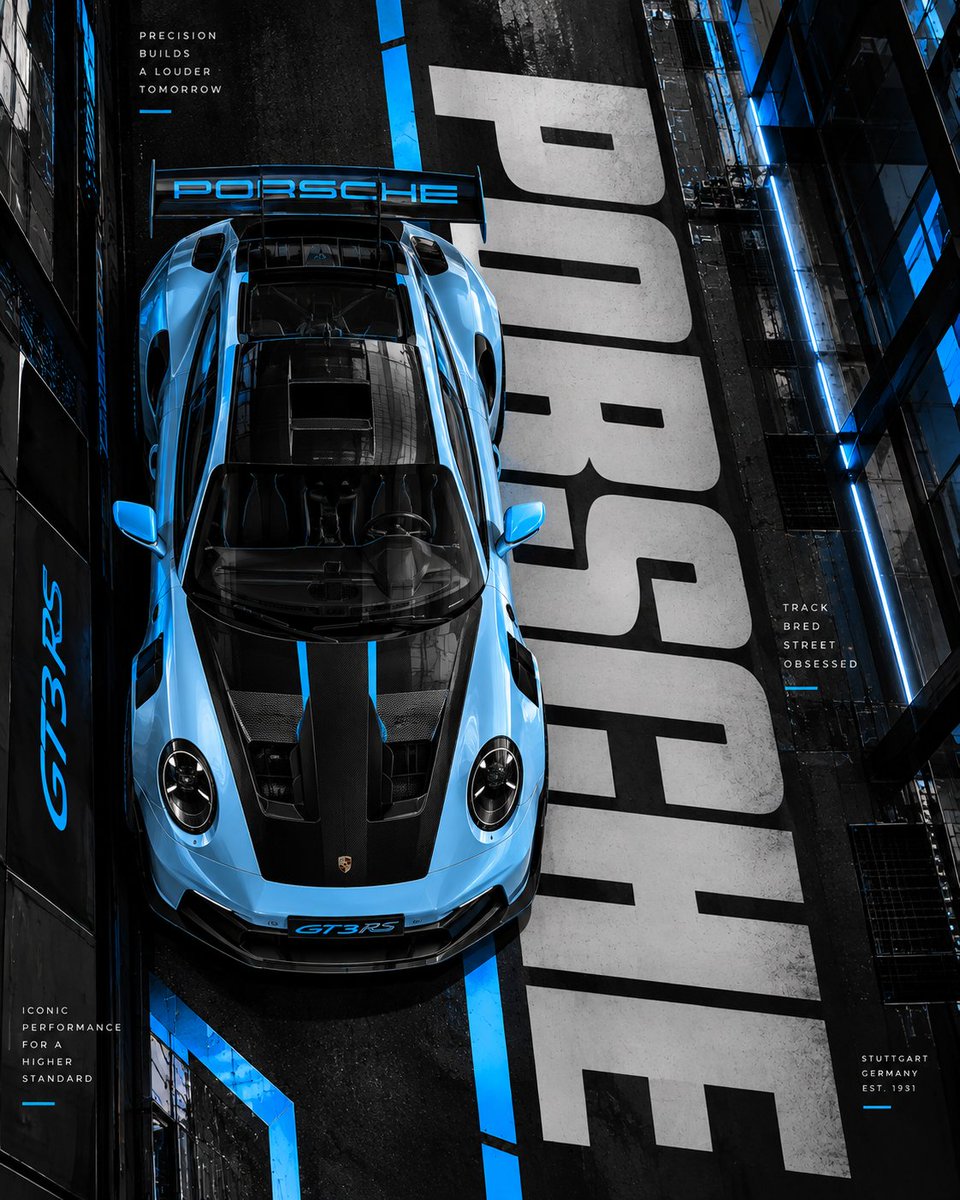
Create a premium futuristic automotive editorial poster featuring a high-performance sports car, designed in the same visual language as a luxury car campaign and modern streetwear graphic poster.
Fields you can change: accent color.
Full prompt
Create a premium futuristic automotive editorial poster featuring a high-performance sports car, designed in the same visual language as a luxury car campaign and modern streetwear graphic poster.
FORMAT:
Vertical 4:5 portrait composition, ultra-high resolution, highly polished commercial artwork. Use a dramatic rotated composition where the car and environment create strong diagonal movement. The image should feel intentionally designed like a premium automotive poster, not like a normal photograph.
CAR:
A sleek exotic supercar viewed from a dramatic high-angle top-down perspective, with the entire vehicle clearly visible. Aggressive aerodynamic bodywork, sharp LED headlights, sculpted panels, detailed wheels, low stance, realistic tires, glossy paint, precise reflections and realistic materials. The car should be the main focal point.
VISUAL STYLE:
Blend photorealistic automotive design with sophisticated digital illustration. Extremely clean edges, simplified geometric surfaces, subtle cel-shading, controlled gradients, crisp highlights, realistic reflections, detailed mechanical elements, and slightly stylized architectural forms. Premium fashion-editorial poster aesthetic.
ENVIRONMENT:
Dark futuristic city architecture viewed from above, black asphalt, geometric buildings, glass surfaces, road markings, cables, windows, structural lines and subtle reflections. Keep the environment mostly black and charcoal so the vehicle stands out strongly.
COLOR PALETTE:
Use a strict two-tone palette: deep black and charcoal as the base, with one strong accent color such as {argument name="accent color" default="electric orange"}. The accent color should appear on the car, road markings, architectural details and selected graphic elements.
GRAPHIC DESIGN:
Add huge bold condensed typography integrated into the environment behind the car. The typography should be partially hidden by the vehicle, creating depth. Use oversized white or light-gray letters with clean geometric forms. Add thin technical lines, subtle grids, minimal racing-inspired markings and abstract graphic shapes.
LIGHTING:
Dramatic directional lighting, strong rim lighting around the car, subtle neon reflections, deep shadows, controlled highlights and cinematic contrast. No excessive glow.
COMPOSITION:
Keep the car large and dominant in the frame. Use negative space around it, strong diagonal lines and architectural perspective. Make the composition feel like a professionally designed automotive campaign poster.
QUALITY:
Extremely detailed, sharp, clean, premium, sophisticated, realistic materials, polished surfaces, precise geometry, high-end automotive advertising, editorial art direction, 8K quality.
IMPORTANT:
No people, no random objects, no clutter, no excessive text, no distorted car proportions, no extra wheels, no malformed geometry, no blurry details, no cheap cartoon appearance. Keep the vehicle recognizable and physically believable.