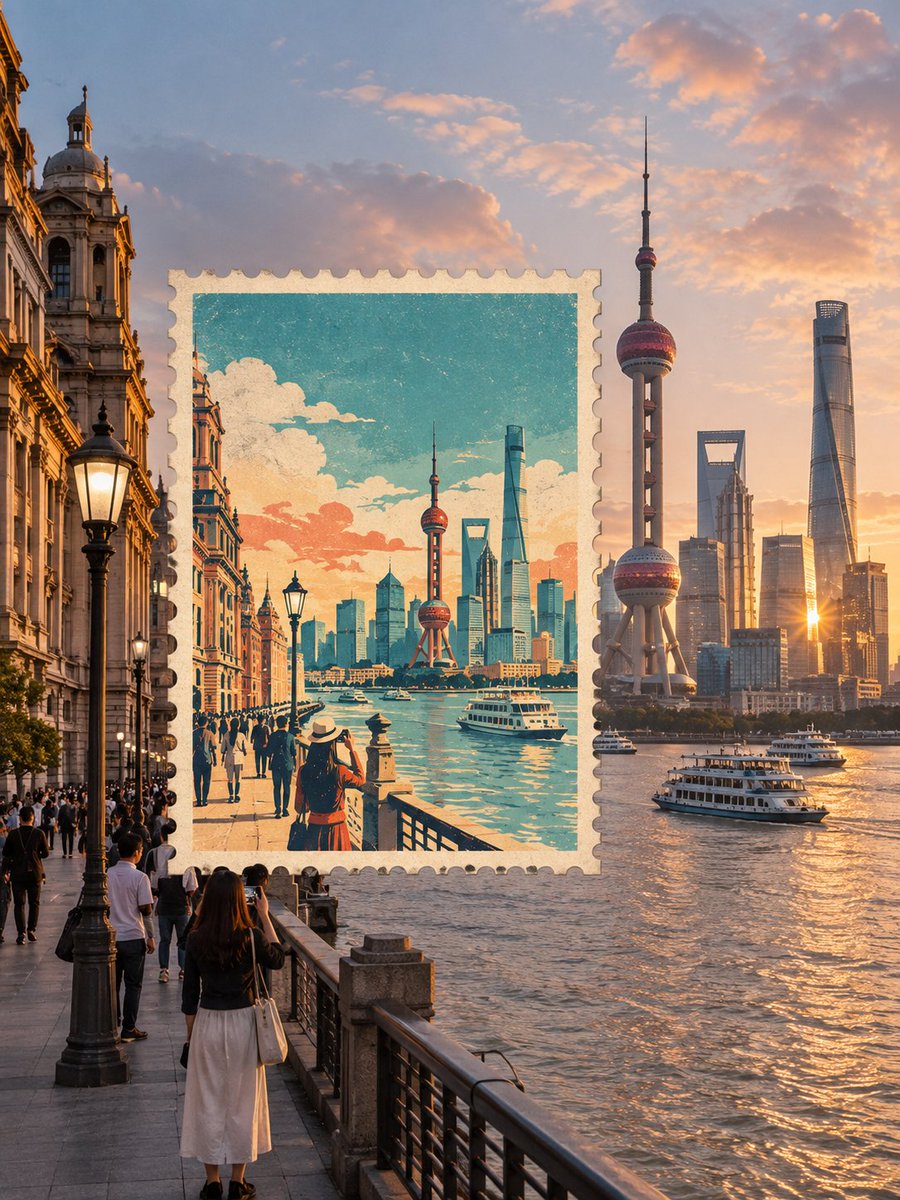
Editorial / Poster
Vintage Japanese Travel Poster Prompt
Create a premium vintage Japanese travel-poster stamp artwork for [COUNTRY / LOCATION / SUBJECT]. TEXT-TO-IMAGE ONLY — generate the entire composition from the location/subject description alone. No reference image required.
Fields you can change: location.
Full prompt
Create a premium vintage Japanese travel-poster stamp artwork for {argument name="location" default="[COUNTRY / LOCATION / SUBJECT]"}.
TEXT-TO-IMAGE ONLY — generate the entire composition from the location/subject description alone. No reference image required.
COMPOSITION
Create a realistic photographic travel scene featuring the most recognizable landmark, landscape, architecture, people, vehicles, or cultural elements associated with {argument name="location" default="[COUNTRY / LOCATION / SUBJECT]"}. Over the core subject area, place one flat postage-stamp-shaped artwork window containing an artistic reinterpretation of the exact same scene.
STAMP ARTWORK
Inside the stamp, transform the scene into a sophisticated 1960s–1980s Japanese tropical tourism poster inspired by classic Okinawa travel posters. Preserve the recognizable composition, architecture, landscape, perspective, and major visual elements while simplifying them into elegant graphic shapes.
Use clean hand-painted silhouettes, subtle vintage ink outlines, broad flat color fields, restrained detail, and a refined 4–6 color palette of turquoise, cyan, coral, warm orange, cream, and muted green. Add subtle vintage print grain, lightly weathered paper texture, and slightly faded yet vibrant colors. Keep generous calm areas of sky, water, pavement, or architecture for a spacious premium poster aesthetic.
STAMP DESIGN
Choose a 3:4 vertical or 4:3 horizontal stamp according to the subject. Keep the stamp moderate in size with clear breathing room around it. Add perfectly even postage perforations along all four sides.
The stamp must lie completely flat against the photographic scene with no thickness, drop shadow, curling, tilt, floating effect, or 3D appearance.
TYPOGRAPHY
No text, titles, captions, dates, numbers, logos, labels, Japanese characters, badges, or decorative typography.
FINAL AESTHETIC
Authentic travel photography × vintage Japanese tourism poster × Okinawa-inspired graphic art × postage stamp. The contrast between the realistic scene and the stylized stamp should feel deliberate, elegant, nostalgic, and seamlessly integrated.
AVOID
Anime, manga, comic-book styling, vector clip art, 3D rendering, excessive detail, clutter, distorted architecture, unrealistic proportions, random landmarks, oversized stamps, uneven perforations, modern graphic design, watermarks, and full-frame illustration.
FORMAT: 3:4 or 4:3, automatically selected based on {argument name="location" default="[COUNTRY / LOCATION / SUBJECT]"}.



